The problem with preparing for emergencies is that you almost never see them coming. They just show up. One minute everything’s normal, the next you’re wearing a mask and can’t find toilet paper of all things, which is exactly what happened during COVID.
If you’ve wondered whether it’s worth stocking up before an emergency, the toilet paper in 2020 is my answer.
Running short on toilet paper is obviously nothing compared to losing a home to a fire or a hurricane, but the principle is the same either way. Having a little extra on hand, having a plan, having some actual skills, buys you time and space to think clearly instead of scrambling.
My wife and I have a running, mostly good-natured disagreement about this. I buy a little extra to be ready, just in case. She uses the very last of something before buying more, to keep the grocery bill down. Lucky for me, we had plenty of extra toilet paper before COVID hit, and that turned out to be a pretty easy point to make once the shelves went empty.
You don’t have to go overboard to be ready. Stocking up just means buying a little extra when you find something on sale and setting it aside. It’s amazing how much adds up when you do that consistently, a little at a time.
Saved Supplies Are Useless If You Don’t Know How to Use Them
Buying extra is only half of it. It doesn’t do any good to have 5-gallon buckets of wheat sitting under the stairs if you don’t actually know what to do with them.
More people know what to do with a container of oatmeal than a bucket of wheat berries. Keeping a rotation matters, not just so things stay fresh, but because if you’re saving something you already eat and enjoy regularly, you’ll actually know how to use it when it counts. If you want to store wheat, learn how to grind it and bake with it now, and put that into your regular rotation. If you’re not willing to do that, don’t store it in the first place, you’re just taking up space you could use for something you’d actually use.
This is the same lesson from my survival seed kit post: if you don’t know how to use what you’ve saved, and it’s not part of your regular rotation, you won’t magically know how to use it the moment you actually need to.
The Five-Day Power Outage
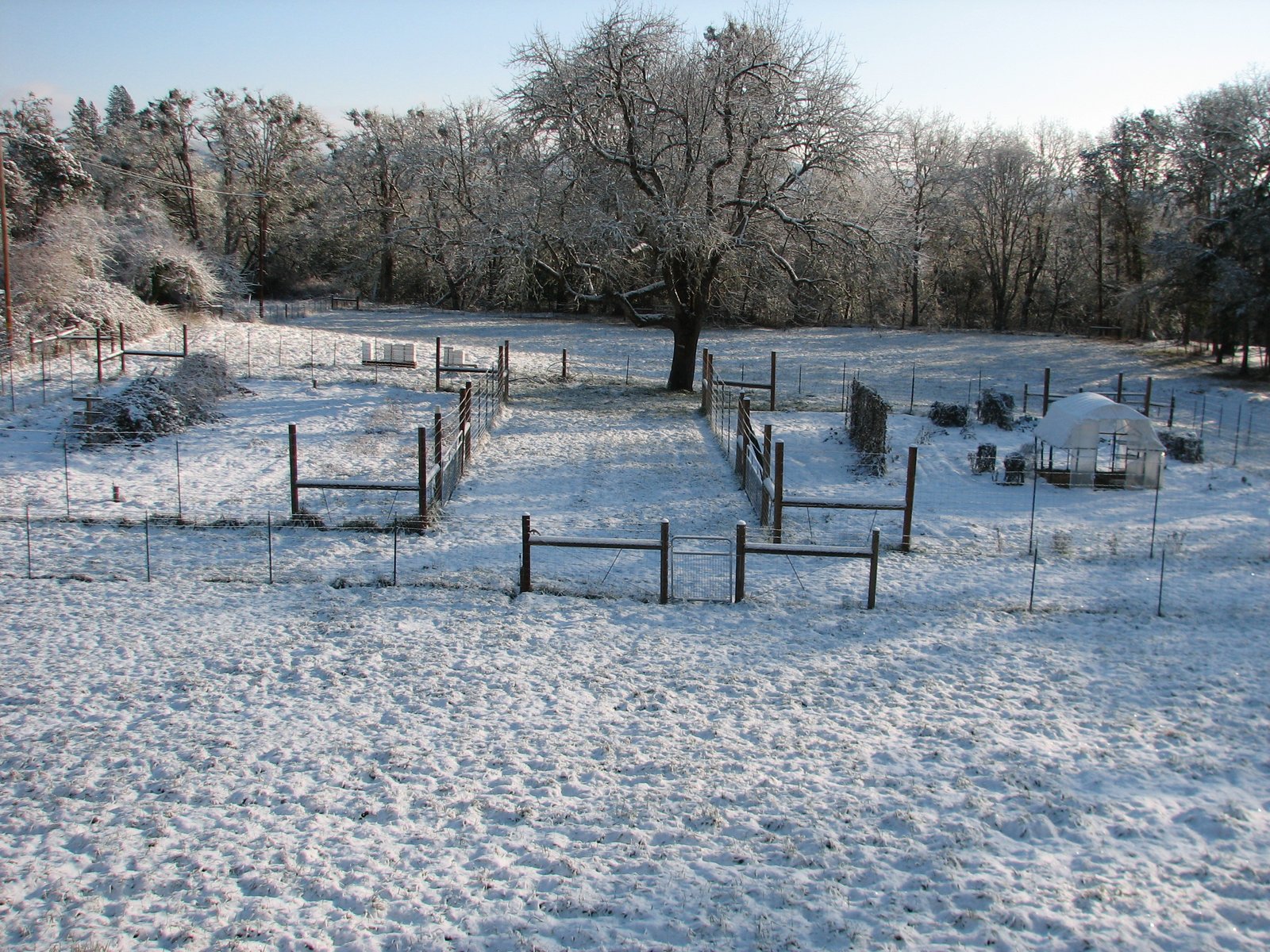
A few years back we had a rare February snowstorm and lost power for five days. That’s when you really find out how fast a small inconvenience turns into a real situation, and how much creativity and common sense end up mattering more than any single piece of gear.
The first night, the power company said the power would be restored at 8 PM. Then 10 PM. Then they stopped giving estimates entirely. First thing the next morning, I started taking inventory of my gas and propane, since without those two, I couldn’t run a generator or operate our travel trailer. My house is large and doesn’t have a wood stove, so we moved into the trailer, and that’s when you really learn how everything actually works. The trailer’s gas ran the stove, the hot water, and the heat, but the heat wouldn’t blow air without electricity, and the electricity only worked as long as the trailer’s batteries held a charge.
I’ve never claimed to be a survival expert, but I do have skills, common sense, and a willingness to get creative. I’ve got a four-wheel-drive pickup and truck driving experience, so driving in the weather itself wasn’t a problem. My first trip into town was a reality check, though, everything was closed. Stores, gas stations, all of it, no power anywhere. I was one of the few people even out driving around. Eventually I found one small sliver of town that still had power, including a gas station, so I filled everything up, grabbed propane, and headed home.
Here’s where it got interesting. I’d actually sold my generator a while back since I never used it, which turned out to be a real mistake. Once I realized the trailer’s own batteries were shot, I ran jumper cables from my truck to the trailer. My truck has two batteries, and that setup would keep the trailer running for about six hours before the truck batteries died too. So what do you do at three in the morning when the truck batteries finally die? You go get your wife’s car and jump-start the truck with it.
By the end of five days we had an actual routine: the trailer to stay warm, the truck to run the trailer, the car to jump-start the truck in the middle of the night, and cooking split between the trailer’s stove and the gas BBQ outside. On the last morning before the power finally came back, my wife was making egg sandwiches on the barbecue.
It was a long five days, and it made clear just how dependent we normally are on outside systems, and how fast that dependency runs out once those systems stop.
Common Sense Beat the Conventional Wisdom
One thing worth mentioning: we left the refrigerator and freezer closed the first day, but the house and garage, where both units sit, eventually dropped below freezing themselves. Everyone I talked to afterward assumed the food should’ve been thrown out after five days without power. I’m honestly not sure why. If the inside of a fridge or freezer is cold, and the air surrounding it outside the unit is also below freezing, I don’t see how that’s a food safety problem. Sure enough, after five days, nothing in the freezer had even thawed.
That said, if you’re heating with wood or another source that keeps your house warm, that changes the equation entirely, and you’d want to think it through differently.
What We Changed Afterward
We learned a lot from that stretch. We sold the travel trailer eventually, but I bought a new generator, and I make a point of keeping gas and propane topped off, especially heading into winter. I keep the batteries in good shape across the vehicles and the generator now too. We had plenty of blankets, warm clothes, food, and water, but the home’s hot water tank ran cold the first day, so be ready to heat water for washing up if you’re relying on stored hot water at all.
Talking with neighbors matters too. Our neighbors had wood stoves, we had propane, gas, food, and blankets. Between the two households, there was more than enough to combine resources if it had come to that. If I hadn’t been curious enough to see how far I could stretch things on my own, a quick call to the neighbor would’ve been the easier route, and there’s nothing wrong with taking that route either.
That’s really the whole point behind you don’t know you’re in it until you’re in it. That night started as a simple power outage and turned into a five-day adventure none of us saw coming. We learned plenty, and we adjusted plenty too.