Most preparedness advice about power outages stops at “buy a generator.” A generator is useful, but it only works as long as you have fuel for it, and most people have never worked out how much fuel that actually is.
I’d sold my generator a while before the February storm that knocked out our power for five days, because I never used it enough. That turned out to be a mistake, and it made me learn more about energy than any list of gear ever did. The full story is in You Don’t Know You’re In It Until You’re In It. This post is about the numbers and the planning behind it.
What It Actually Took
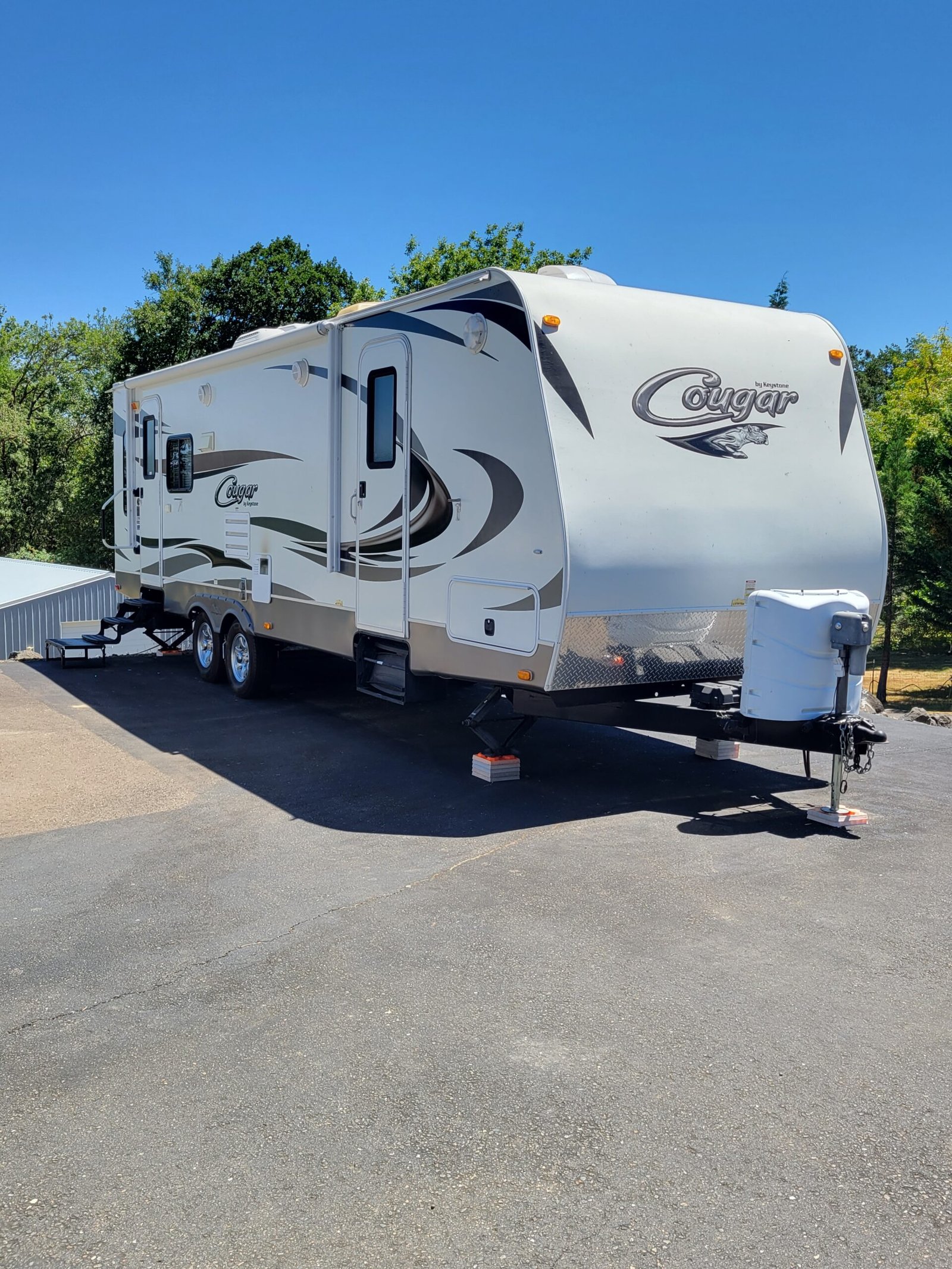
My house is large and doesn’t have a wood stove, so we moved into the travel trailer. Heating that one small trailer used about 10 gallons of propane a day. Over five days, that’s roughly 50 gallons of propane, and it doesn’t count the gas the truck burned on trips to town for more fuel.
The first morning, before anything else, I took inventory of my gas and propane. That was the right first move, because everything else depended on those two. Without them, I couldn’t heat the trailer or run anything else.
Fuel Isn’t the Only Thing You Run Out Of
The trailer’s propane ran the stove, the hot water, and the heat. But the heat wouldn’t blow air without electricity, and the electricity only lasted as long as the trailer’s batteries held a charge. Ours were shot. So the propane was there, and I still couldn’t use it to stay warm.
That’s the part nobody puts on a checklist. Whatever you plan to heat or cook with, find out what else it needs to run. A propane heater with a blower needs power. A stove might need an igniter. A pellet stove looks like a good backup, but it needs electricity to run, so it won’t work in an outage unless you can power it. A fuel supply that can’t be used isn’t a supply.
The Season Changes the Problem
In summer or nice weather, the main thing you need fuel for is cooking. You can get by with very little.
In winter, and especially in freezing weather, the problem changes. Now you need to stay warm, and heat is what burns through fuel. Planning for a summer outage and planning for a winter outage are two different jobs, so ask which one you’re actually preparing for, and be honest that winter is the harder one.
What You Can Do Depends on Where You Live
If you’re in an apartment complex, you’re at the mercy of the utility company. You can’t run a generator inside, and you may not be allowed to run one outside. About the only option is something like a small travel trailer parked nearby, or in the parking lot if that’s allowed. Check before you count on it.
In a rented or owned home, you have more choices: a generator, a travel trailer, a propane stove, or whatever combination suits you. Whatever you pick, you’ll find out quickly that it works only as long as you have gas and propane.
If you have natural gas to the house, or a wood stove and firewood (a regular wood stove, not a pellet stove, which needs electricity), you’ll last much longer, especially in cold weather. Natural gas usually keeps flowing unless things get really bad, and firewood doesn’t depend on anyone’s supply line. Those two are the closest thing to a real advantage you can have.
Comfortable or Careful
During our five days I figured out that I could make it to town and resupply, so we ran things the comfortable way. We heated the way we normally would, and I made the trips for fuel when we needed them. That only worked because I had a four-wheel-drive truck, experience driving in bad weather, and found one small part of town that still had power and a gas station.
If it had been a real emergency, and we’d had a limited supply that had to last, we would have done it differently. We would have bundled up and heated less. That’s where a couple of cords of wood and a wood stove would have been worth far more than extra gas cans.
The point is that you get to choose between comfortable and careful only if you know how much fuel you have and how long it will last. Without that, you’re guessing.
What I Changed Afterward
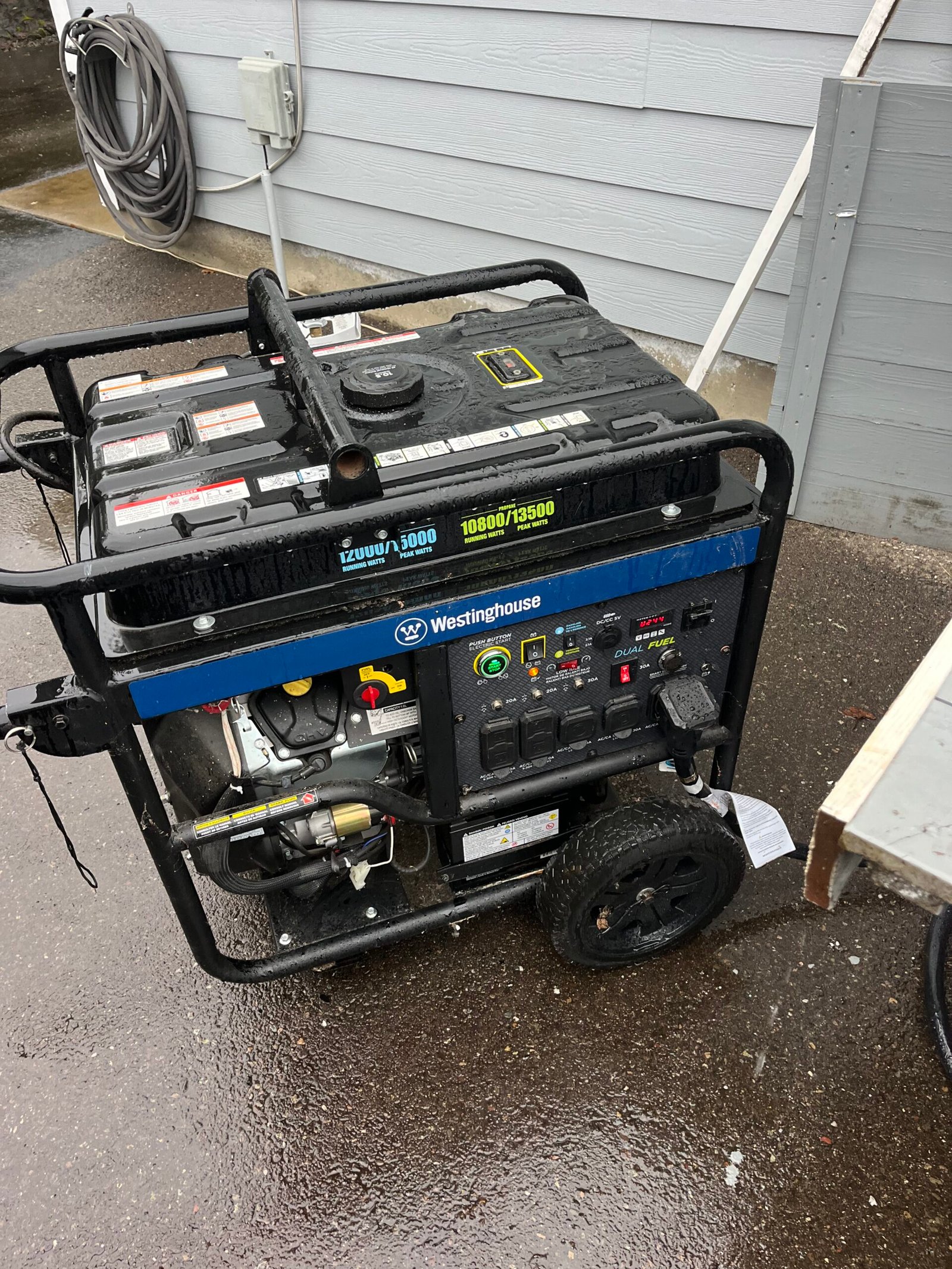
The five days gave me a list to work from. I added a generator that runs on gas or propane. On 5 gallons of gas it runs about 11 hours, and I’ve used a full 5 gallons several times on one-day outages. Run around the clock, that works out to roughly 11 gallons a day, about what the trailer heater was burning in propane. I also built the garage kitchen, which had running water and a stove converted to propane, so cooking didn’t depend on the house’s electric service. I’ve since taken it out while getting ready to move. I wrote up how I built it in The Garage Kitchen: How I Built a Second Kitchen Without Losing the Parking Space.
We haven’t had another five-day outage since. We’ve had several one-day outages, and we were more than ready for each of them. That’s what the experience was worth. The first outage was a scramble, and the later ones were routine because I’d already learned what I needed.
Shrink the Space You’re Keeping Comfortable
I have a very large house, and heating all of it in an outage is impossible unless I had a very large wood stove. So I stopped trying to heat the house and worked out how to bring our conveniences into a smaller area. With the generator and space heaters, we can stay comfortable there for a couple of days, with heating, cooking, internet and wifi, and the TV. The refrigerator and freezer don’t move, they’re powered right where they sit, so we keep refrigeration too. It still takes fuel, but a lot less than trying to keep the whole house warm.
That took some planning ahead. My generator is wired to the house, but it only powers about half of the circuits, so I had to learn which circuits those are and arrange things around them. Even then, I run two extension cords to power the internet and the router. I had to know what we’d want running, where it could all fit, and what each piece needed to run. The size of your home sets how much fuel an outage takes, so you can change that number by changing how much space you try to keep comfortable.
Work Out Your Own Numbers
You don’t need a complicated plan. You need four answers.
- What do you need energy for? Cooking, heat, keeping the freezer cold, charging things. Decide which of those matter most, and what each one needs to run besides fuel.
- How much fuel does each of those use? My trailer used about 10 gallons of propane a day. Yours will be different, and the only way to find out is to use your equipment and write down what it burns.
- How long will what you have last? Divide what you have stored by what you use in a day. If the answer is shorter than you expected, you want to know that before the outage, not during it.
- How can you make it last longer? Heating one room instead of the whole house, wearing more layers, cooking one pot of something instead of several. Adding a wood stove and firewood changes the numbers more than anything else.
Know Your Generator and Your Fuel
Generators aren’t interchangeable. How long one runs depends on its size, how hard it’s working, and which fuel it’s burning. Most portable generators run somewhere around 8 to 14 hours on a tank at half load, but fuel use roughly doubles between a light load and a full one, and a small generator and a large one use very different amounts. If yours runs on propane as well as gas, expect fewer hours on propane, since it holds less energy per gallon. On one dual fuel model’s published numbers, the same size tank gave about a quarter fewer hours on propane, with a little less power too.
Here’s how the three common sizes compare. These are ballpark figures, mostly from manufacturer ratings at half load, so your own numbers will vary.
- Small, about 2,000 watts: on gas, a 2,000 watt inverter with a 1-gallon tank runs 6 to 8 hours at a quarter load. On propane, small inverters in the 2,000 to 4,500 watt range can run 10 to 20 hours on a 20-pound tank at light load.
- Medium, 3,500 to 5,000 watts: on gas, a 3,500 watt dual fuel model runs about 14 hours at half load on a 4.7-gallon tank, and a 5,000 watt generator with a 5-gallon tank runs about 8 to 10 hours. On propane, the same 3,500 watt model runs about 10.5 hours on a 20-pound tank.
- Large, 7,500 to 10,000 watts: on gas, a 10,000 watt generator with a 10-gallon tank runs 8 to 12 hours at half load, and 5 gallons lasts only 3.5 to 5 hours. On propane, a 7,500 watt generator runs roughly 4 to 5 hours on a 20-pound tank.
The gap between the two fuels comes from the energy in each. Gasoline holds roughly 120,000 Btu per gallon, and propane about 91,500, so a gallon of propane carries around a quarter less energy. A 20-pound propane tank holds about 4.6 gallons, which is why it gives fewer hours than a gas tank of about the same size.
Mine runs about 11 hours on 5 gallons of gas, and I know that because I’ve used it. Find out your own number. Read the manual, then time a real tank under the load you actually run. Know how much fuel you keep, how long it lasts, and which circuits the generator powers.
Keep Your Fuel on Hand, and Keep It Fresh
Fuel on hand only helps if it still works when you need it, because gasoline goes stale. Gas that contains ethanol, which is most of what’s sold at the pump, lasts about 3 months. Non-ethanol gas should last at least 6 months if it’s stored properly, and a stabilizer can stretch stored gas to a year or more.
Here’s how I handle it. In the winter, I add fuel stabilizer to the gas I’m storing. In the summer, I rotate it, using the older gas while I’m mowing and weeding so what I have on hand stays fairly fresh. Non-ethanol is the better choice for small engines and for storage, since ethanol attracts moisture and breaks down faster. Most small engines are rated for gas with up to 10 percent ethanol, so it isn’t strictly required, but nothing above that belongs in them. E15 isn’t approved for small engines.
If my non-ethanol gas is getting old, I rotate it into a car, which is built to handle ethanol blends anyway. I don’t rotate it the other way. Older ethanol-blend gas is the fuel that goes stale fastest, so it doesn’t go into the generator or the mower.
Propane is easier. The propane itself doesn’t go bad, but the tank does have a date stamped on it, and that’s when the tank needs to be inspected, not when the propane expires. Store tanks outdoors, with the valve shut, never indoors.
I also try to fill my vehicles when they’re at half a tank instead of letting them run down to empty. A vehicle isn’t much good with the empty light on because you planned to fill it on the next trip to town and the storm came first. When we lost power, the gas stations were closed.
Test It Under Real Conditions
Run your whole setup before you need it, and don’t do it on a nice day. A test on a mild afternoon will show you that the generator starts and the heaters work, and it will miss everything else.
Test it in the rain and you’ll find out you need a flashlight and a raincoat to get out and do what needs doing. Test it when it’s freezing and you’ll find out you need real winter clothing, especially good gloves. Every problem you find during a test is one you won’t be finding in a real outage.
Check the Gear You’re Counting On
Planning to bundle up only works if you actually have what you need to do it. It doesn’t help to decide you’ll stay warm in layers and then find out you have no good winter clothes or cold-weather sleeping bags. Or that you have everything but gloves. Go through it before you need it, because you can’t buy any of it during an outage. When I went into town, everything was closed.
This is the same idea behind everything else on this site. Learn what you’ll actually need while the stakes are low, so you aren’t finding out under pressure. For a step-by-step version, see the Practical Preparedness Guide.