Survival seed kits feel like the simplest form of preparedness there is. Buy the kit, put it somewhere secure, and you’re covered — if the world falls apart, you’ve got seeds, seeds become food, food means survival. Done.
There’s one problem: seeds aren’t food. Skills turn seeds into food, and that’s the part no kit can give you.
The apocalypse-hits-tomorrow test
Say it actually happens tomorrow. You pull out your trusty seed kit. Now what?
A lot has to line up before you take one bite of lettuce. First, your skills — do you actually know how to grow what’s in that kit? Second, the weather — did this hit in winter, meaning you wait months for spring, or were you lucky enough that it hit in May? And then there’s just time: seeds germinate, plants grow, and none of that happens overnight.
The timeline nobody puts on the package
Sprouts are the fast exception — ready in 3 to 5 days, which is why they’re worth knowing on their own (see my sprouts post). Past that, radishes are your next-fastest real food, typically 20-25 days for quick varieties, sometimes up to 60 for others. Lettuce takes longer than people expect — 7-10 days just to germinate, then another month-plus before you’re eating leaves, six-plus weeks for a full head.
But your skill level changes those numbers more than the seed packet ever will:
Non-gardener — Basic mistakes cost a real chunk of the kit: overwatering, bad spacing, no pest management. First real food, if anything survives: 6-8 weeks.
Novice gardener — Gets greens and radishes established, though trial and error on unfamiliar crops still costs some of the harvest. First real food: 4-5 weeks.
Master gardener — Best odds by far, with ideal May timing. First greens: 3-4 weeks. A full harvest cycle running: 8-10 weeks.
So even in the best case — a master gardener, perfect timing — most preparedness guidance puts a real resilience buffer somewhere between 30 and 90 days of food and water. A seed kit was never meant to replace that buffer. It extends it, once you already have the skills to make it work.
Why “fast” isn’t the same as “fed”
Even once you’re harvesting, there’s a second problem: lettuce and radishes are almost entirely water and fiber. Lettuce runs about 15 calories per 100 grams; radishes aren’t far behind at 16-19. An adult needs roughly 2,000 to 2,500 calories a day to keep functioning. Do the math and it’s almost funny — you’d need to eat close to 29 pounds of lettuce in one day just to hit that number. Nobody’s growing that much in a windowsill, and nobody’s eating that much even if they did.
So fast-growing crops buy you something — vitamins, fiber, the psychological win of eating something you grew — but they were never going to be the calories that keep you alive. Real survival calories come from crops that take real time and real skill: potatoes, beans, grains, squash — the slow crops, the ones that don’t fit a 3-to-5-day sprouting timeline no matter how good your seed kit is.
In other words, a survival seed kit hides a second gap. It’s not just “how fast can I eat something.” It’s “how long until I can eat enough” — and that answer is measured in a full growing season, not a package label.
What “heirloom” actually means
You’ll see “heirloom,” “open-pollinated,” and “non-GMO” on every seed kit, and they’re not just marketing words — they’re the reason seed saving works at all.
Most seed companies sell hybrids today (often labeled F1) — bred by cross-pollinating two different varieties to get specific traits. Hybrids grow great, but if you save their seed and replant it, what comes up next year won’t match the parent plant. The traits don’t breed true.
Heirloom seeds work the opposite way: open-pollinated varieties that have been grown and saved, generation after generation, often for decades or longer. Plant one, save its seed, and next year’s plant will be the same variety again. That’s what makes heirloom seeds the only real starting point for a genuine seed-saving cycle — a hybrid seed kit gets you one good harvest; an heirloom seed kit gets you a garden that can renew itself indefinitely.
What to look for if you buy a survival seed kit
Kit quality varies a lot, and the marketing on some of these leans harder into “doomsday” than “usable.” So before you buy, check for:
- Heirloom / open-pollinated / non-GMO, explicitly stated — if it doesn’t say all three, assume it’s not built for seed saving.
- Real variety count, not just seed count — a kit bragging about “20,000 seeds” might only be 8-10 varieties. What matters is how many different crops you actually get, not raw seed volume.
- A match for your growing zone — a kit built for the desert Southwest won’t perform the same in the Pacific Northwest. Look for kits that specify a broad range of USDA zones, or better, one matched to yours.
- Proper sealing for long-term storage — mylar or similar moisture-blocking packaging, rated for multiple years, stored somewhere cool and dark.
- A mix of fast and slow crops — not just quick greens. You want radishes and lettuce in there, but also the slower staples (beans, squash, grains) that actually carry calories.
- Untreated seed — large-scale farms chemically treat some commercial seed for disease resistance. For a home garden meant to reseed itself, untreated is what you want.
Where I’d actually buy one
I’ve ordered from all three of these — this isn’t a “here’s what I’ve heard” list, it’s what I actually use.
Victory Seed Company — my go-to. Family-owned, 100% open-pollinated and non-GMO, and they’ve spent over 25 years preserving heirloom varieties. Their big kit is the Victory Garden Seed Vault, with smaller culinary herb, medicinal herb, and vegetable-only packs if you’d rather start smaller.
Territorial Seed Company — a personal favorite for a simple reason: their Cottage Grove, Oregon store is 50 minutes from me, and I’ve been there many times. They’re non-GMO, sign the Safe Seed Pledge, and I use their seed regularly. If you’re anywhere near western Oregon, it’s worth the drive just to see their operation in person.
Seed Savers Exchange — a nonprofit that’s preserved heirloom varieties since 1975. If the seed-preservation mission matters to you as much as the seeds themselves, this one’s worth a look.
The Start At Home First version: build your own
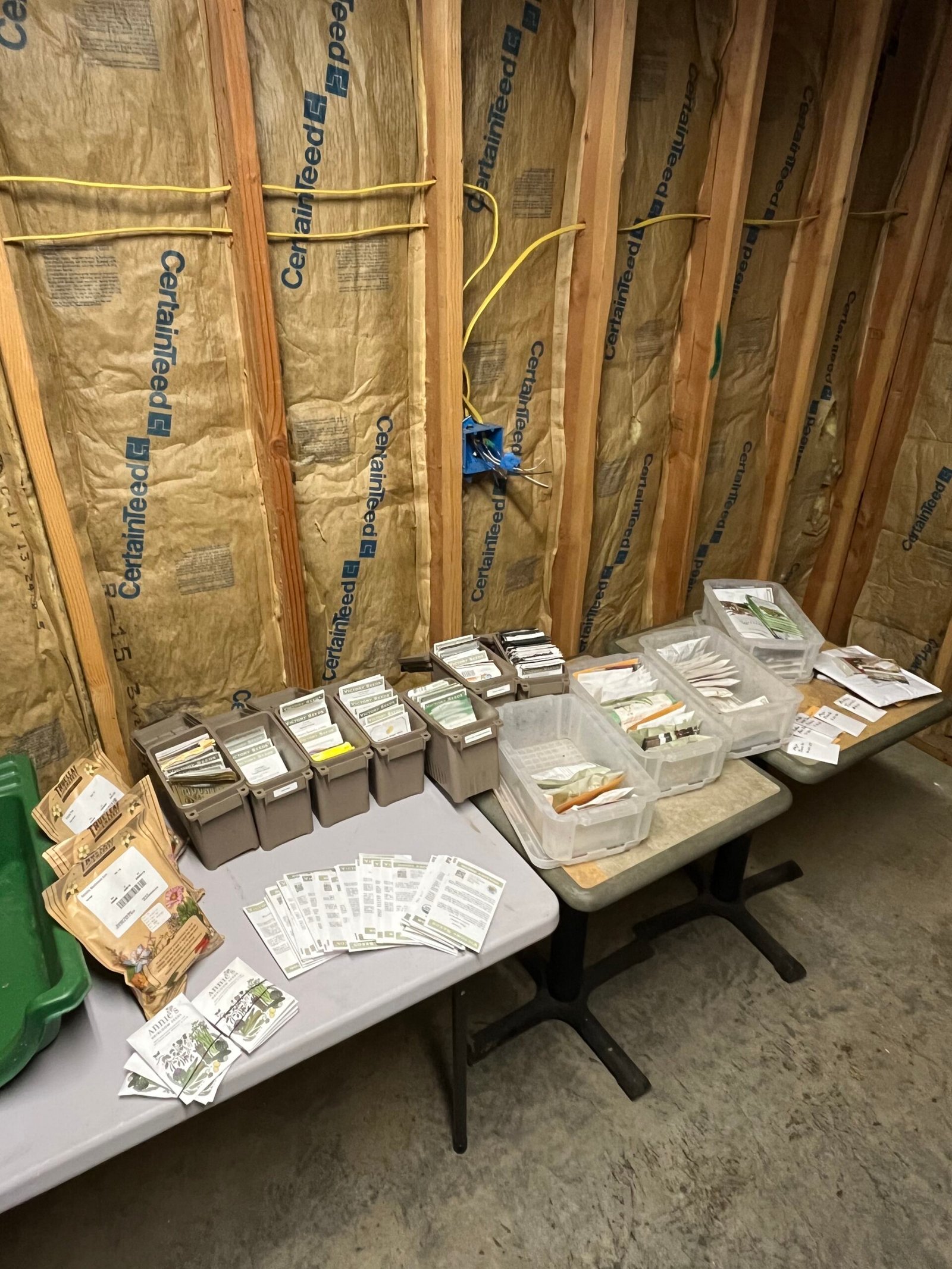
Here’s the thing worth knowing before you buy anything: you don’t need a kit at all. The do-it-yourself version is just buying individual packets of the heirloom, non-GMO varieties you actually want to grow — and using every one of them as practice for seed saving.
A seed kit, no matter how good, eventually runs out. Seed saving doesn’t. So once your skills improve enough that you’re saving seed from everything you grow, a survival seed kit becomes optional — you’ve already built the thing it was trying to sell you.
Weighing the cost
Whether you buy a kit or build your own packet by packet, you’ll start planting and saving either way — the real deciding factor is what you can afford.
If money weren’t a factor, here’s what I’d do: buy two kits. A large one, sealed and put away as the real reserve. A smaller one, opened right away, just to learn on — get your hands dirty, make your mistakes, start saving seed, without touching the big vault you’re counting on later.
If you’re working with less — say you’re in an apartment and just want to start with something — that’s exactly when the build-your-own route makes sense. Buy a handful of individual heirloom packets for whatever you can actually grow where you are, and start the seed-saving habit now. You don’t need the big kit to start; you need heirloom seeds and a windowsill.
Crops that work in small spaces, to start that cycle now:
- Lettuce and leafy greens (fast, forgiving, container-friendly)
- Radishes (some of the fastest seed-to-harvest crops there are)
- Green beans (grow vertically, good yield for the space)
- Cherry tomatoes (patio pots, one plant goes a long way)
- Herbs — basil, cilantro, chives (windowsill-viable)
- Microgreens (days, not weeks, and near-zero space needed)
A sealed kit sitting in a closet is a bet
It’s a bet that you’ll figure it all out under pressure, for the first time, with everything on the line. Opening one now and planting it isn’t giving up your reserve — it’s turning your reserve into practice. So you start learning, start saving seeds, and start the cycle running, so that if the day ever comes, you’re not a beginner holding a kit. You’re someone who’s already done this before.