Most guides to raising animals for food assume you have acreage, a barn, or at least a backyard coop. Quail don’t need any of that. I raised mine in a small space, no land required, and if you’re looking to learn meat and egg production without needing a yard for it, quail are one of the best places to start.
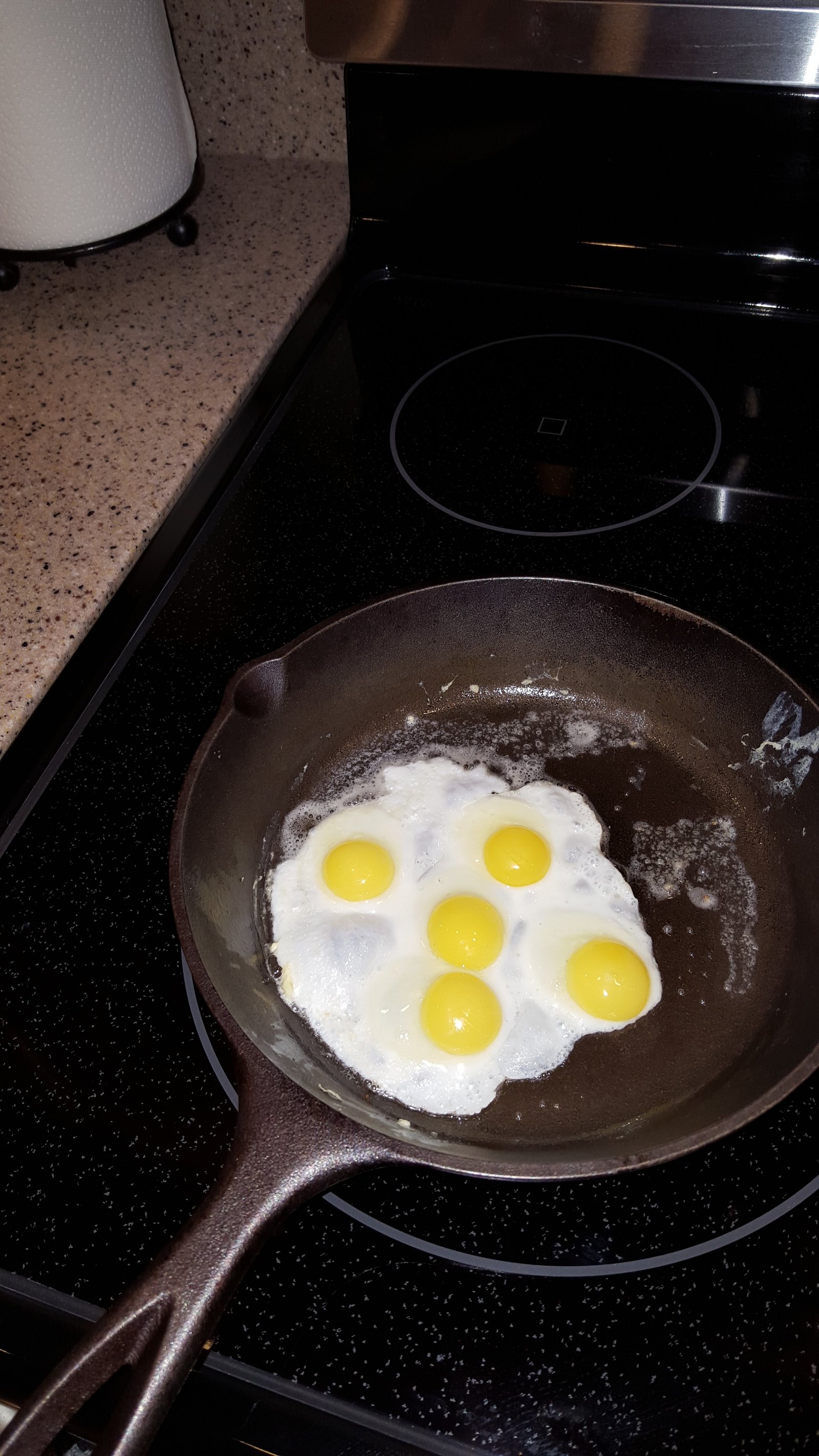
Five quail eggs work out to about one and a half chicken eggs. I actually prefer them to chicken eggs. The smaller, bite-size portions of yolk are more pleasant to eat than a full chicken yolk, and my wife always said they tasted creamier.
Why Raise Quail?
I raised quail for eggs and meat for a good stretch, and out of everything I’ve raised, chickens, ducks, rabbits, and turkeys, quail were the easiest by far. Their small size means they can be raised in a small room, garage, or shed. Nobody needs acreage to do this. They’re also quiet, aside from the occasional chirping male, so the neighbors won’t mind, though it’s still worth checking your local regulations before you go all in.
Of everything I’ve raised, quail were the quickest and easiest to butcher too.
You might be thinking they’re too small to bother with, not enough meat for a real meal, eggs too tiny to be worth the effort. But that smallness actually solves a real problem. Everybody sees those cute chicks at the farm store and buys a dozen to start, and since chickens lay about an egg a day in season, that’s a dozen eggs a day. Who’s using a dozen eggs a day? Do the same thing with quail and you still get a dozen eggs, but that’s only the equivalent of 3 to 4 chicken eggs a day, a much more manageable amount. You can keep a productive group in a space about the size of a small chest freezer.
Where to Start
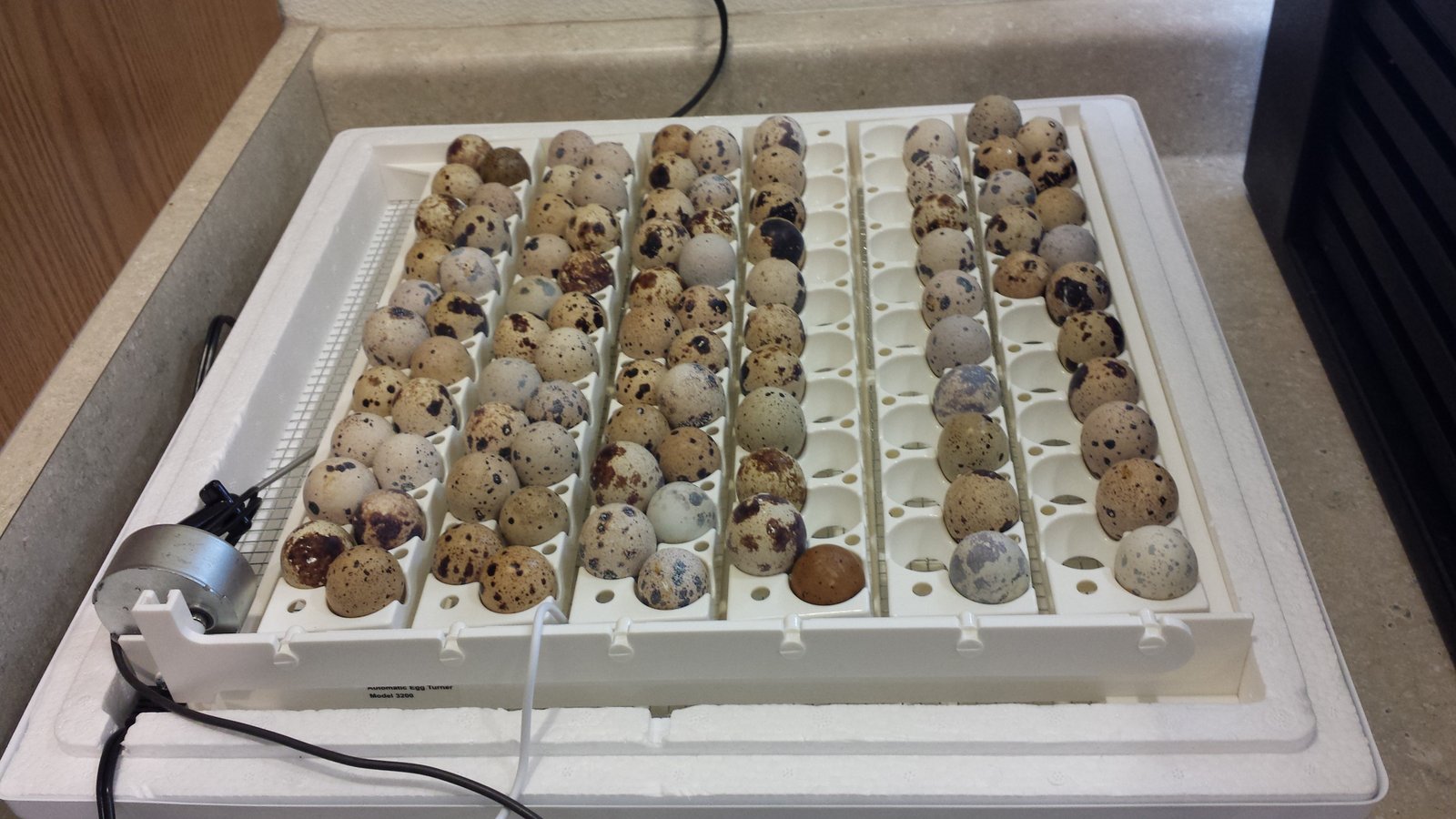
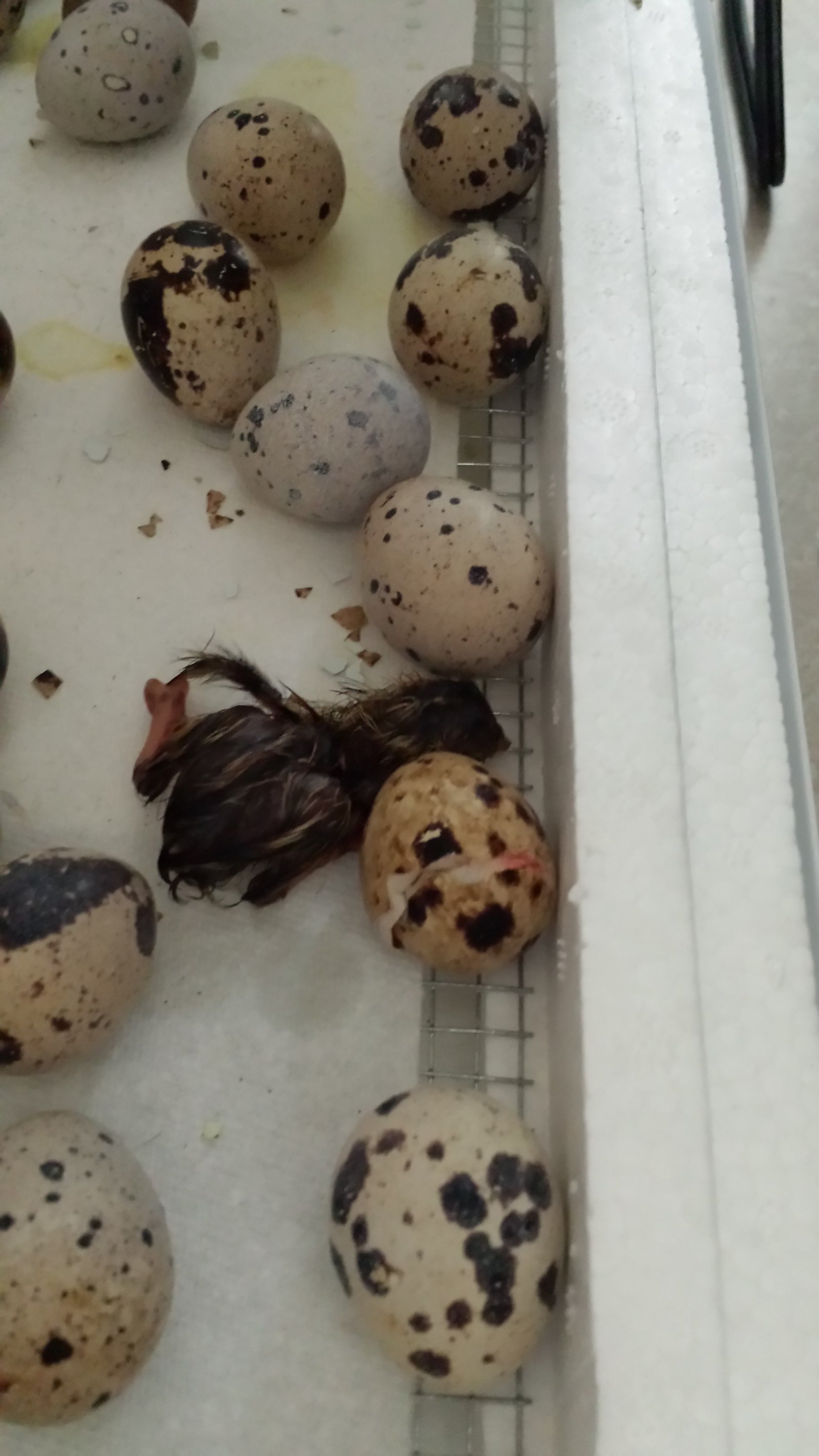
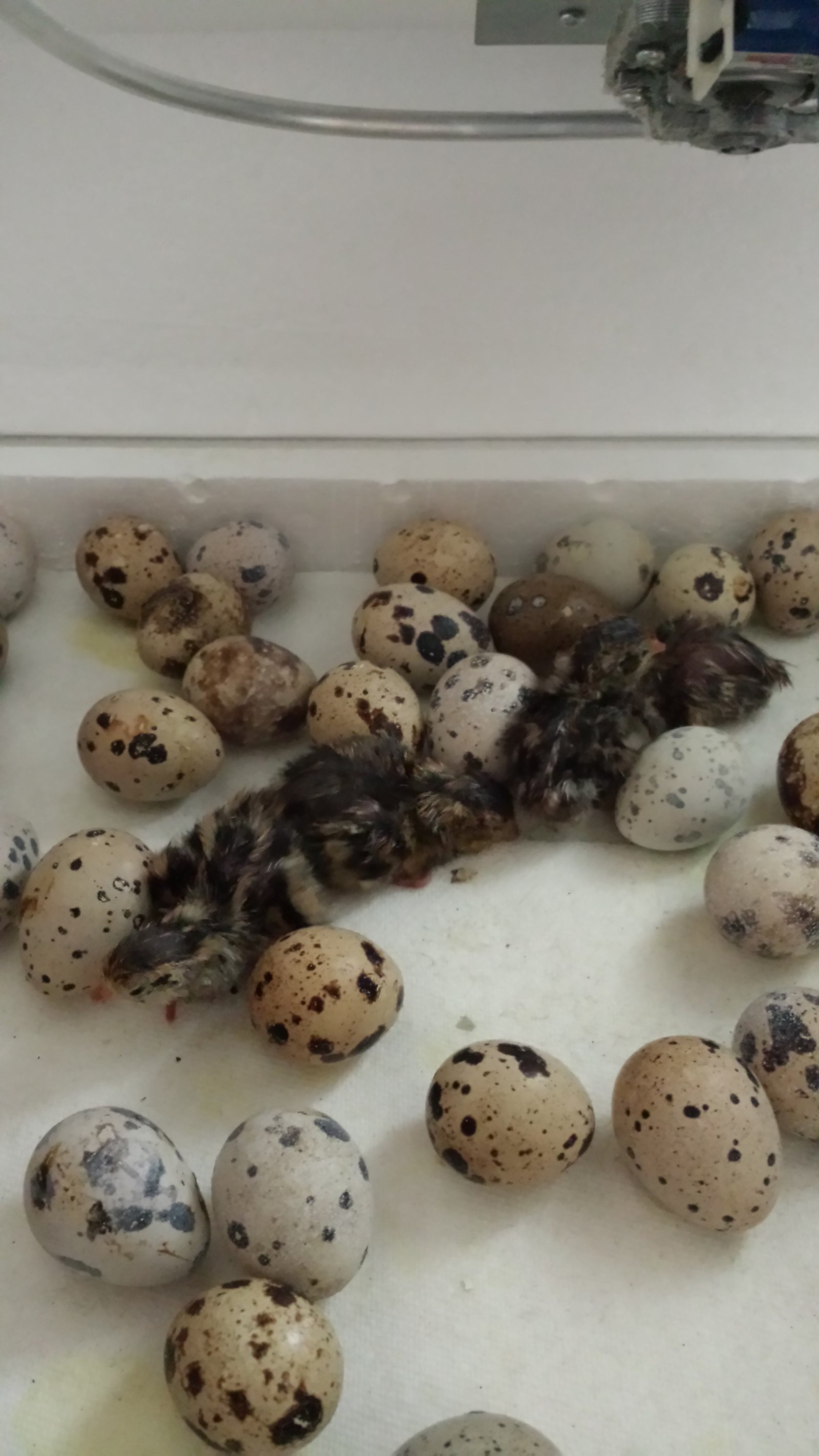
[PHOTO: Eggs loaded into the incubator]
It all starts with the eggs. If you’re only after eggs, buying chicks is fine. If you want a steady meat supply, you’ll want an incubator.
I started by ordering 198 eggs from two different breeders. Shipped hatching eggs have a low success rate, and mine were no exception, only about 40 chicks actually hatched. That’s just the reality of it, so don’t be discouraged if your first batch comes in low. It’s normal.
How the Rotation Works
Once you’ve hatched your first batch, you’re done buying eggs. From that point on, aside from the feed bill, everything is free as long as you keep at least one male and one female. Quail mature fast, 6 to 8 weeks, so your first batch will already be laying by the time you’re ready to hatch the next round. You’ll want one male for roughly every three to four females to keep the eggs fertile.
From my 40 hatched chicks, I butchered 22 at 8 weeks old. That left me 18 birds, 5 males and 13 females, producing about 13 fertile eggs a day.
Selling the Extra
Once you’re getting 13 eggs a day, you’ll have more than you need. I added the eggs to the same email list I was already using to sell vegetables, and sold every extra I had. Same lesson as everything else on this site: I made more money from something I was already doing, selling to people I was already selling to.
The Full Rotation
I also put some of those fertile eggs straight back into the incubator to keep the cycle going. You can hatch as many as you want, whether you’re building up your laying flock or stocking the freezer with meat.
Here’s how the numbers played out from that first batch:
- 13 eggs a day after the first 8 weeks
- 60 eggs into the incubator by week 10
- At least 40 new chicks by week 12
- 40 new full-grown quail by week 20
- Rotate as much or as little as you want from there
By comparison, chickens take 16 to 24 weeks just to start laying. With quail, you’re already on your second generation, sitting on plenty of eggs and meat in the freezer, in that same span of time.
Where I’ve Landed Since
I kept quail for a good while before eventually rotating over to chickens, which is what I’m raising now. Quail were never a problem; they were just a phase in figuring out what fit my setup best at the time. That’s really the whole point of this site: try what makes sense for where you are, learn what works, and adjust as your situation changes. If you’re short on space or dealing with local restrictions on other animals, quail are absolutely worth serious consideration. They’re forgiving, efficient, and fast, which makes them one of the best animals to actually learn on. I do miss the quail, and I still have the incubators so I’m sure they will return to my backyard.
This builds on the same idea behind why skills matter more than where you live: you don’t need land to learn this. You just need to get started.