This is the 100-chick plan from Section 5 of the Home Economy Guide.
I spent years and years paying for all of my ventures, the garden, the poultry, the livestock, and I justified the expense by telling myself I was producing the best quality food for my family, so the cost wasn’t that important. I always look for a better way and adjust as I go.
One day I was at the local farm store, and they had day-old chicks on sale, only a dollar each. In that moment it all just clicked. I realized I could have free chickens, and maybe free eggs. I’d been raising chickens for years. I’d been selling plant starts and vegetables. But it just clicked that I could have free chicken.
The Math That Made It Click
As I looked at those chicks, I realized I could buy 100 of them for $100. I knew from experience that full-grown laying hens sell for $15 to $20, so right away I knew that in 12 to 20 weeks I’d have $1,500 to $2,000 worth of chickens on my hands.
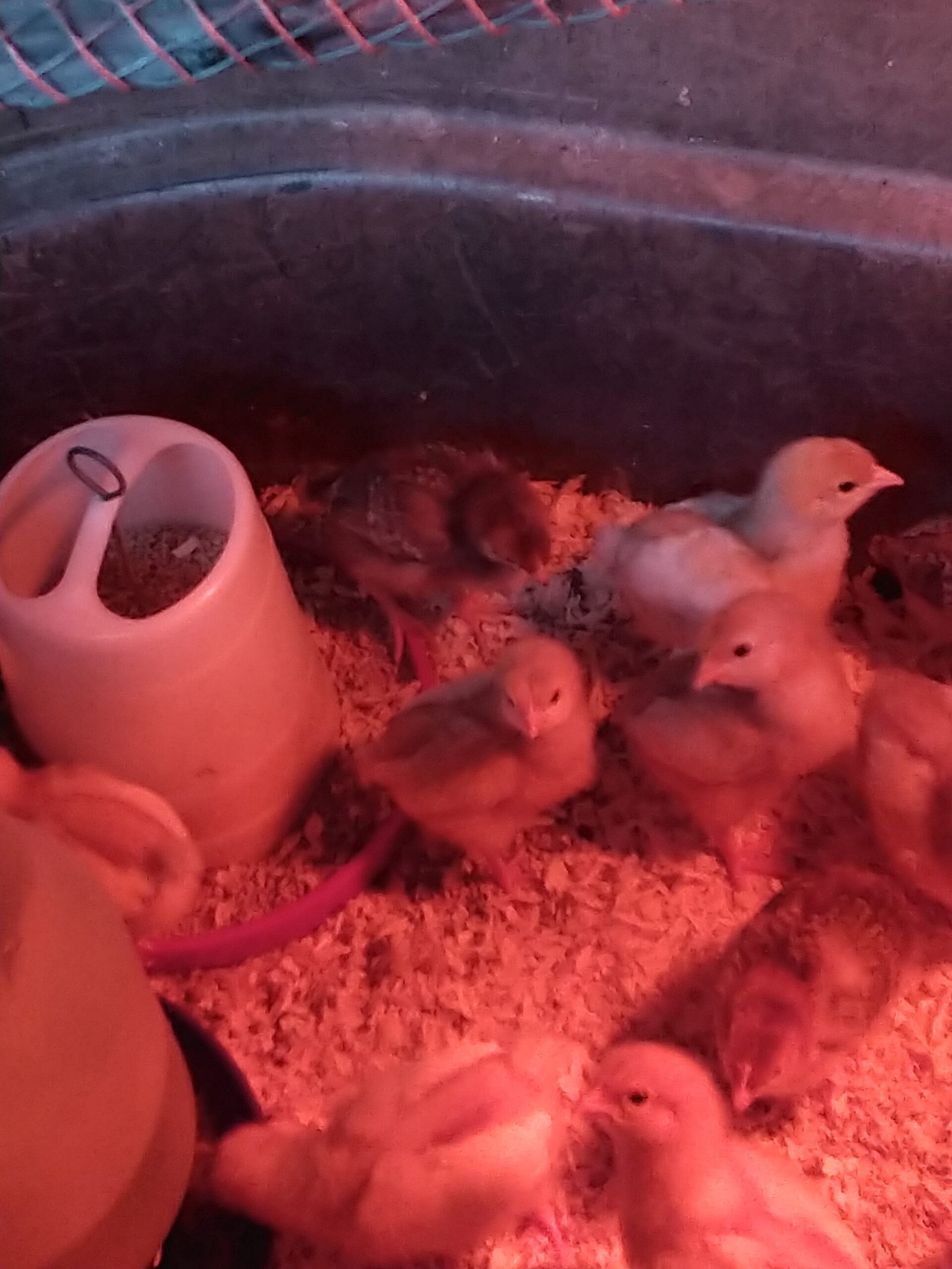
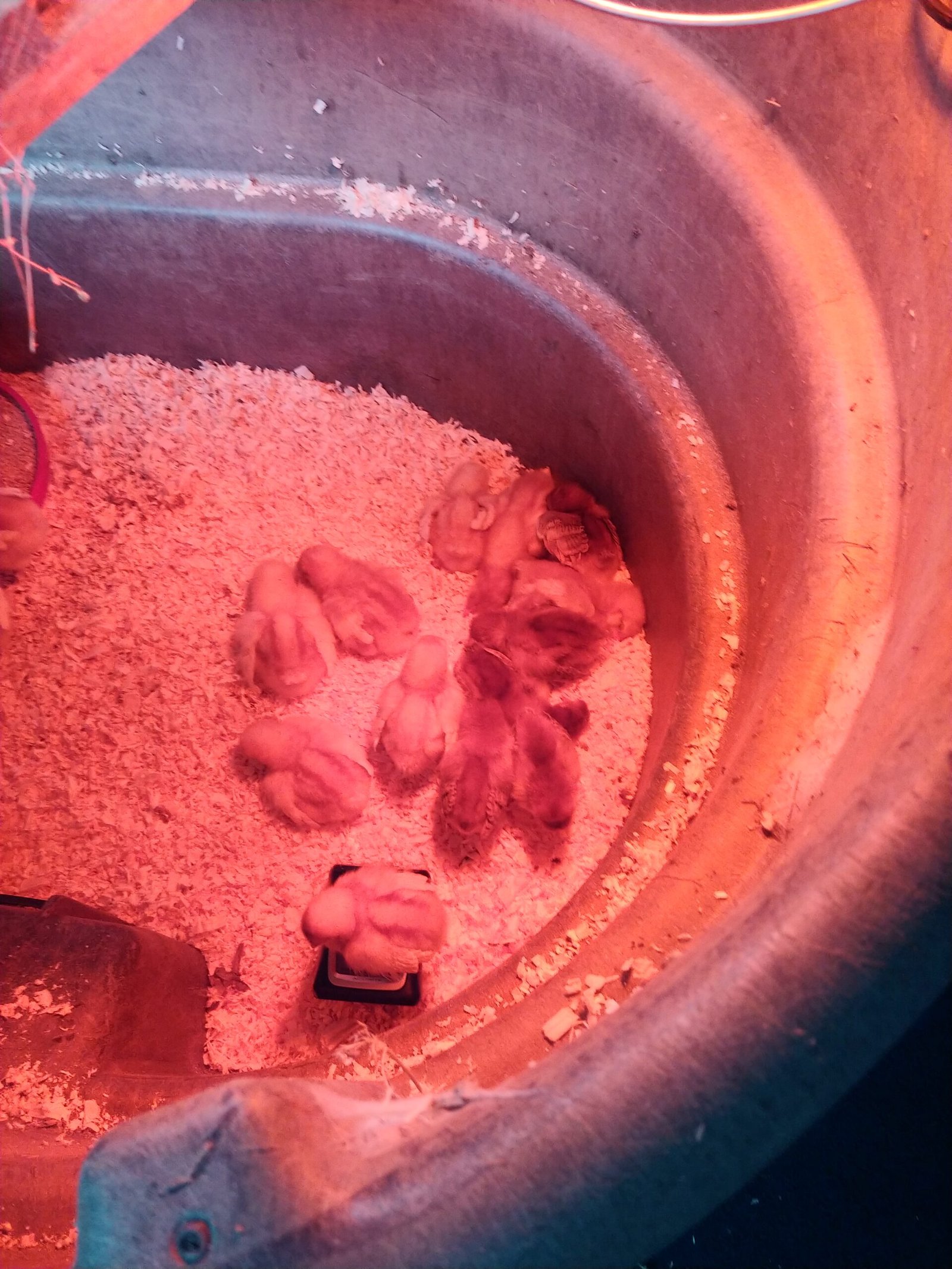
I also knew my own limits. I had room for 100 chicks, after all, they’re tiny at first, but I didn’t have room for 100 full-grown chickens. I did have room for 50 for a short stretch. So the plan fit together around what actually worked for my setup:
- Raise the chicks to 6 to 12 weeks, sell half (50) at $15 each
- Raise the rest to 20 weeks, sell 26 more at $20 each
- Keep the remaining 24 as free laying hens
That’s $1,270 from sales, minus $100 for the chicks and around $425 for feed. By the time the hens started laying, everything was paid for, and I had about $745 left over.
That was the best-case version, since the chicks were on sale, but the sale is what amplified the benefit of doing something I was already going to do anyway.
It got me thinking I could cover my costs on just about anything this way, doing a little more and selling the extra. I’d already done this with plant starts. Now the idea had expanded.
It Still Works Without the Sale Price
I know what you’re thinking: chicks aren’t always a dollar each, and this won’t pencil out the same at full price. The only thing that really changes is how much you have left over at the end. Look for sales and you’ll improve your outcome, but the math still works at higher prices too, all the way up to full retail, you just adjust your numbers, or your chick count, to match.
Here’s roughly how it plays out at different scales. I ran three chick prices, the dollar-a-chick sale price that started this whole idea, and $3.99–$6.99, since normal chick prices vary by breed, roughly $3.49 to $10.99, but average out around $4 to $6, so those two numbers make good sample prices for this example. At each scale I show two options: keeping more hens for yourself, or keeping fewer and selling more.
Feed cost estimates are based on a $19 bag of feed (about $2.50 in feed per bird by 12 weeks, and $6 total per bird by 20 weeks). These are estimates to illustrate the pattern, not exact figures, your actual feed cost will depend on your feed prices and how efficiently your birds convert it.
Chicks at $1.00 each
| Chicks Bought | Kept (free hens) | Sold at 12 wks ($15) | Sold at 20 wks ($20) | Chick Cost | Feed Cost | Total Cost | Total Revenue | Left Over |
|---|---|---|---|---|---|---|---|---|
| 25 | 5 | 12 | 8 | $25 | ~$108 | ~$133 | $340 | ~$207 |
| 25 | 3 | 12 | 10 | $25 | ~$108 | ~$133 | $380 | ~$247 |
| 50 | 12 | 25 | 13 | $50 | ~$213 | ~$263 | $635 | ~$372 |
| 50 | 6 | 25 | 19 | $50 | ~$213 | ~$263 | $755 | ~$492 |
| 100 | 24 | 50 | 26 | $100 | ~$425 | ~$525 | $1,270 | ~$745 |
| 100 | 12 | 50 | 38 | $100 | ~$425 | ~$525 | $1,510 | ~$985 |
| 150 | 35 | 75 | 40 | $150 | ~$638 | ~$788 | $1,925 | ~$1,137 |
| 150 | 24 | 75 | 51 | $150 | ~$638 | ~$788 | $2,145 | ~$1,357 |
Chicks at $3.99 each
| Chicks Bought | Kept (free hens) | Sold at 12 wks ($15) | Sold at 20 wks ($20) | Chick Cost | Feed Cost | Total Cost | Total Revenue | Left Over |
|---|---|---|---|---|---|---|---|---|
| 25 | 5 | 12 | 8 | ~$100 | ~$108 | ~$208 | $340 | ~$132 |
| 25 | 3 | 12 | 10 | ~$100 | ~$108 | ~$208 | $380 | ~$172 |
| 50 | 12 | 25 | 13 | ~$200 | ~$213 | ~$413 | $635 | ~$222 |
| 50 | 6 | 25 | 19 | ~$200 | ~$213 | ~$413 | $755 | ~$342 |
| 100 | 24 | 50 | 26 | ~$399 | ~$425 | ~$824 | $1,270 | ~$446 |
| 100 | 12 | 50 | 38 | ~$399 | ~$425 | ~$824 | $1,510 | ~$686 |
| 150 | 35 | 75 | 40 | ~$600 | ~$638 | ~$1,238 | $1,925 | ~$687 |
| 150 | 24 | 75 | 51 | ~$600 | ~$638 | ~$1,238 | $2,145 | ~$907 |
Even at $3.99 a chick, close to four times the sale price I actually paid, the flock still clears a solid profit at every scale. So what happens at the higher end of that average range, closer to $6.99?
Chicks at $6.99 each
| Chicks Bought | Kept (free hens) | Sold at 12 wks ($15) | Sold at 20 wks ($20) | Chick Cost | Feed Cost | Total Cost | Total Revenue | Left Over |
|---|---|---|---|---|---|---|---|---|
| 25 | 5 | 12 | 8 | ~$175 | ~$108 | ~$283 | $340 | ~$57 |
| 25 | 3 | 12 | 10 | ~$175 | ~$108 | ~$283 | $380 | ~$97 |
| 50 | 12 | 25 | 13 | ~$350 | ~$213 | ~$563 | $635 | ~$72 |
| 50 | 6 | 25 | 19 | ~$350 | ~$213 | ~$563 | $755 | ~$192 |
| 100 | 24 | 50 | 26 | ~$699 | ~$425 | ~$1,124 | $1,270 | ~$146 |
| 100 | 12 | 50 | 38 | ~$699 | ~$425 | ~$1,124 | $1,510 | ~$386 |
| 150 | 35 | 75 | 40 | ~$1,049 | ~$638 | ~$1,687 | $1,925 | ~$238 |
| 150 | 24 | 75 | 51 | ~$1,049 | ~$638 | ~$1,687 | $2,145 | ~$458 |
Even at the higher end of that average range, the math still works, though the margin gets thin at the smaller scales. At 25 chicks and $6.99 each, you’re only clearing $57 to $97, but the lesson here isn’t how much you make it’s that you’re getting the chicks for free and if there is anything over that it’s a bonus. Obviously the bigger the batch, and the better the price you buy at, the more chance of having extra money to put back into your pocket.
As you can see, the flock pays for itself at every price point and scale I ran the numbers on. Buying at a lower price naturally leaves more in your pocket, and keeping fewer hens for yourself means selling more, which also leaves more behind. The trade-off is yours to make: more free hens for your own eggs, or more cash left over.
Use Common Sense and Do Your Own Research
These numbers are built around $15 and $20 sale prices, but that’s not the ceiling everywhere. Some breeds sell for more. If you’re raising something like a Lavender Orpington instead of a standard production layer, you might see $10.99 chicks turn into hens selling well past $20 each, or you might just need to sell more of them at that higher price to hit the same result. Either way, it’s worth researching what breeds actually bring in your area before you commit to a number.
But keep the actual goal in mind. This post is about getting to free. Breaking even, chicks and feed fully paid for, hens and eggs left over at no cost to you, is already the win. Anything past that is extra, and extra is always better. The bigger the extra, the better it gets. But don’t lose sight of the fact that free was the whole point to begin with.
Other Ways That Work
You don’t have to keep any hens at all. You could buy chicks, sell them all in that $20 range once they’re closer to laying age, and just pocket the difference.
You could also buy extra layer-variety chicks to fund the purchase of meat-variety chicks, letting one batch cover the cost of the other.
Your real limitation isn’t the math. It’s your available space and your imagination.
This Isn’t Just About Chickens
The same idea applies to almost any animal you’re already raising. Buy three sheep, sell two. Buy four cows, sell three. The mechanics scale to whatever you’re set up for.
The one thing to watch for is your market. If you raised 1,000 quail, you might not be able to sell the extras unless quail happen to be popular where you live. Chickens and eggs sell almost everywhere. Make sure whatever you scale up actually has buyers nearby before you commit to the numbers.
This builds on the same idea behind turning skills and excess into income: do what you’re already doing, just a little more of it, and let the extra pay for the whole operation.