I’ve written before about turning skills and excess into income, and my garage plant-starting operation was one of the clearest examples of that. But I never got into how I actually built the thing on the cheap. That’s what this post is about.
I already had tomato seeds, planting flats, potting soil, and one lighted plant stand from doing my own starts every year anyway. The seed would’ve gone bad if I didn’t use it, so it only made sense to grow more than I needed and sell the extra. That part was easy. Sourcing everything else on a budget was the actual project.
The Cup Problem
My first hurdle was something as small as pots. I priced out proper planting pots and little plant marker sticks, and everything was more than I wanted to spend, especially since the whole point was doing this with what I already had.
After shopping around online and in stores, I settled on plain white paper cups from Costco. They were cheap to begin with, and since I could write the plant variety right on the side with a Sharpie, I skipped the cost of marker sticks entirely. The price dropped to just a few cents a cup, and they were environmentally friendly on top of it.
The Shelving Problem
Cups solved, next problem: where to put them all once they were planted.
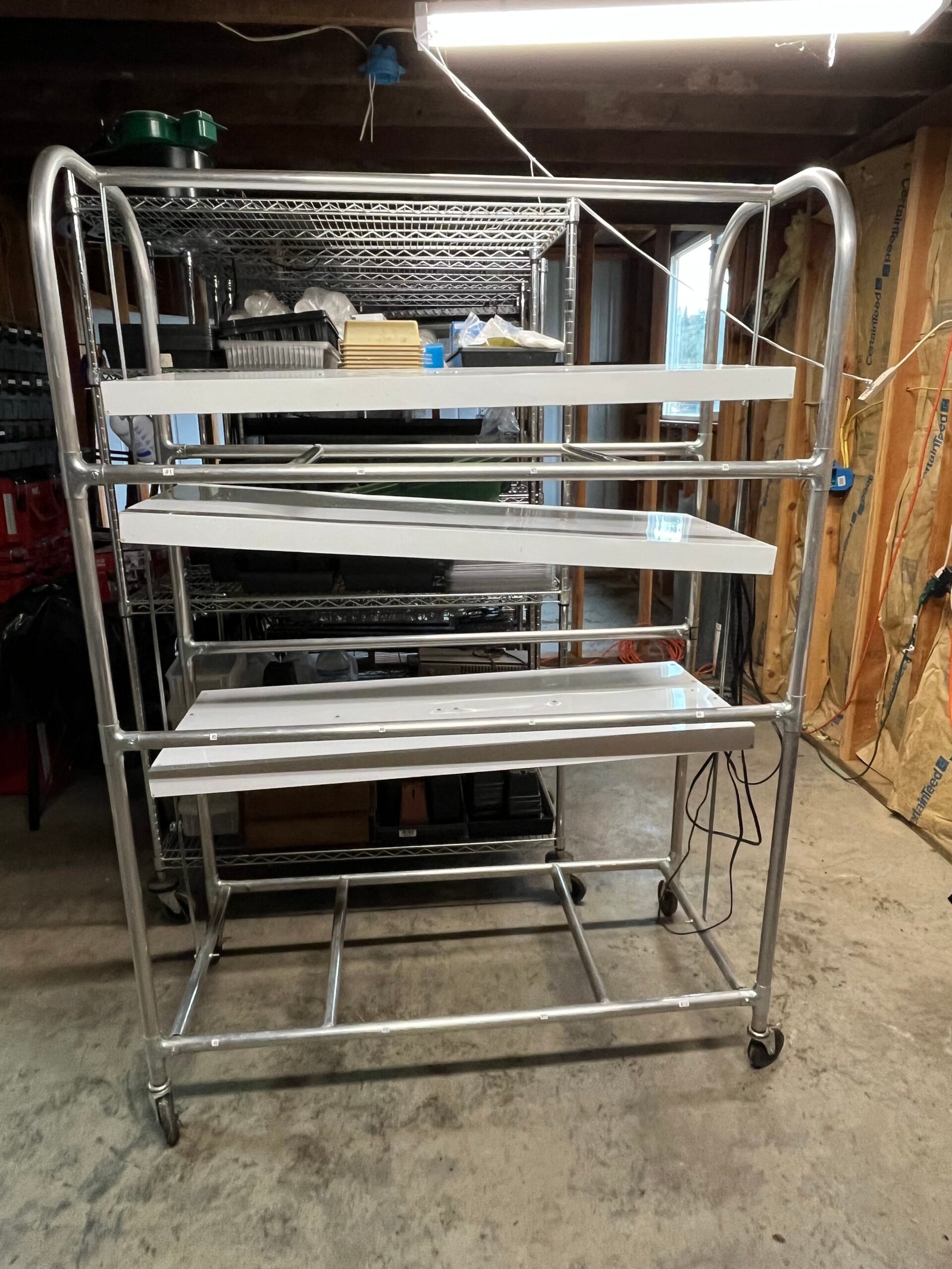
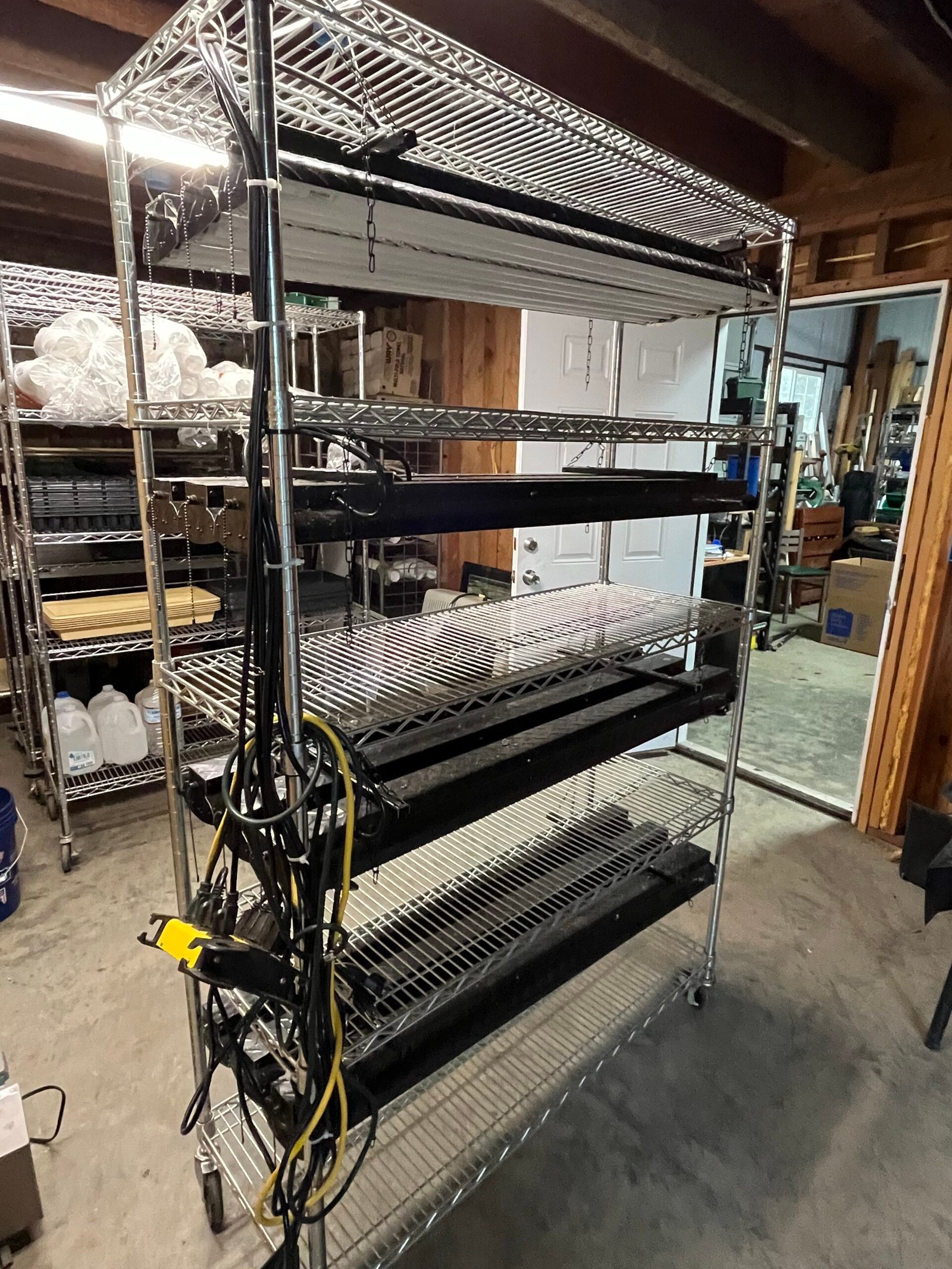
I needed more lighted shelving, and prices had jumped a lot since I bought my first unit eight years earlier. Three-shelf commercial units were running around $800, four-shelf units closer to $1,200. Pricing out everything I actually needed for the operation, I was staring down $2,000 to $3,000 just in shelving.
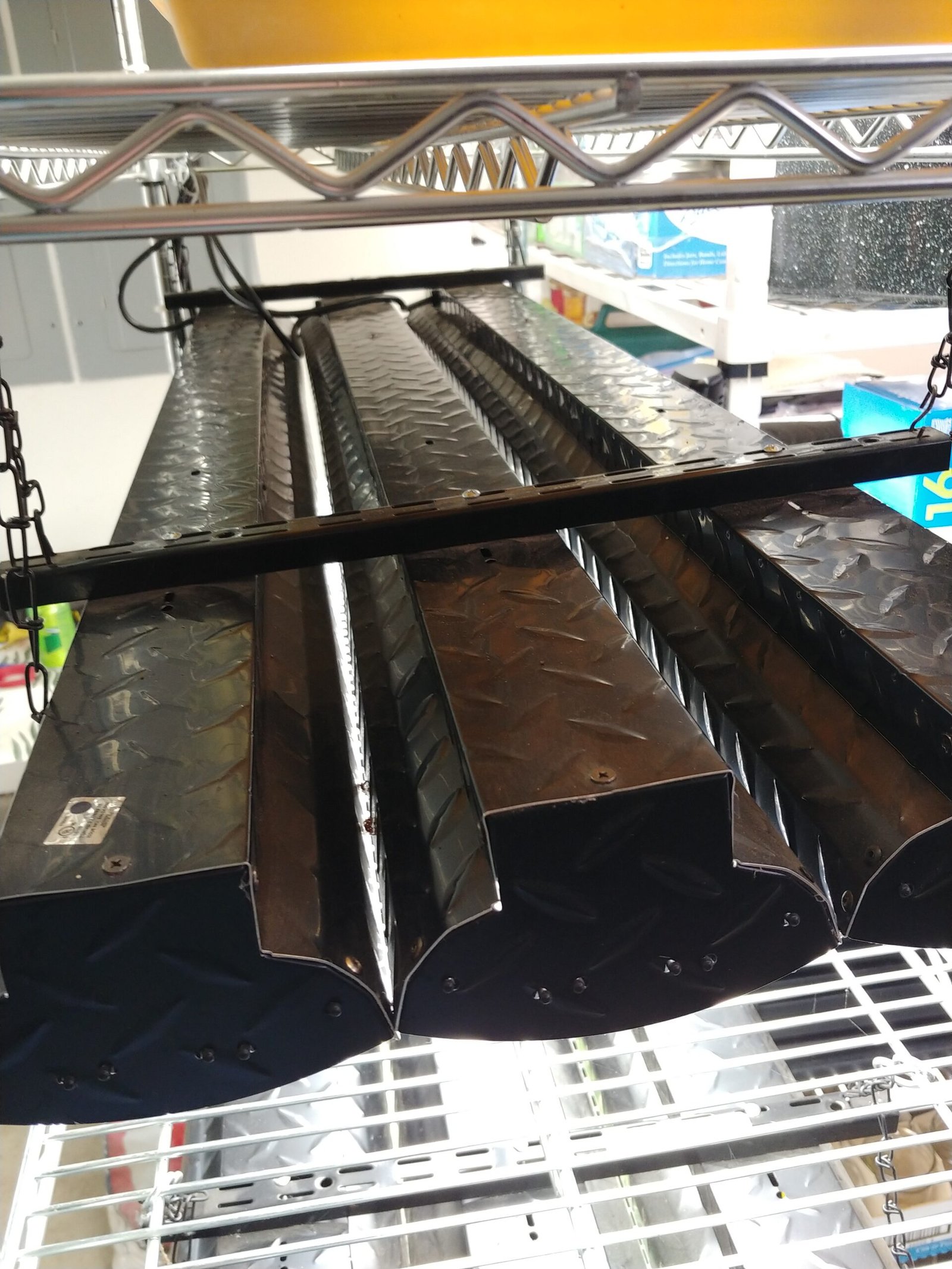
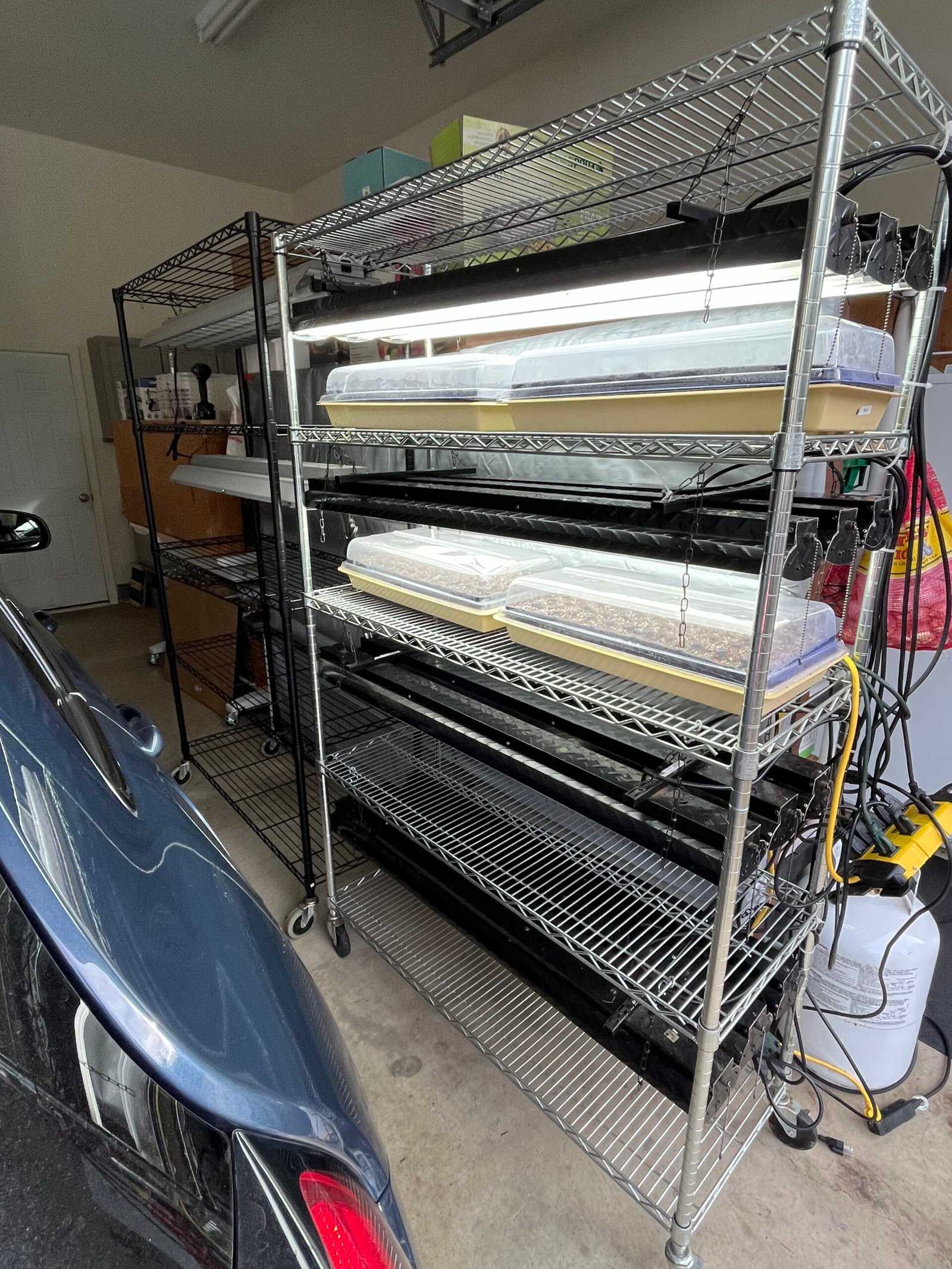
So I went back out to my shop to see what I already had. I found some metal shelving on wheels, 18 inches deep by 4 feet wide, and picked up shop lights at Home Depot to mount on them myself. I would’ve preferred 24-inch-deep shelving to match my 22-inch planting trays exactly, but new 24-inch units were nearly $300 each versus $179 for the 18-inch version. The trays hung over the edge a little, but they worked fine, and the savings were worth the minor overhang. I did later find a 24-inch unit sitting in my own shop, and if I can find those secondhand for cheap, I’ll still take them over the 18-inch ones. But the 18-inch shelving is everywhere and inexpensive, so it’s a perfectly good starting point.
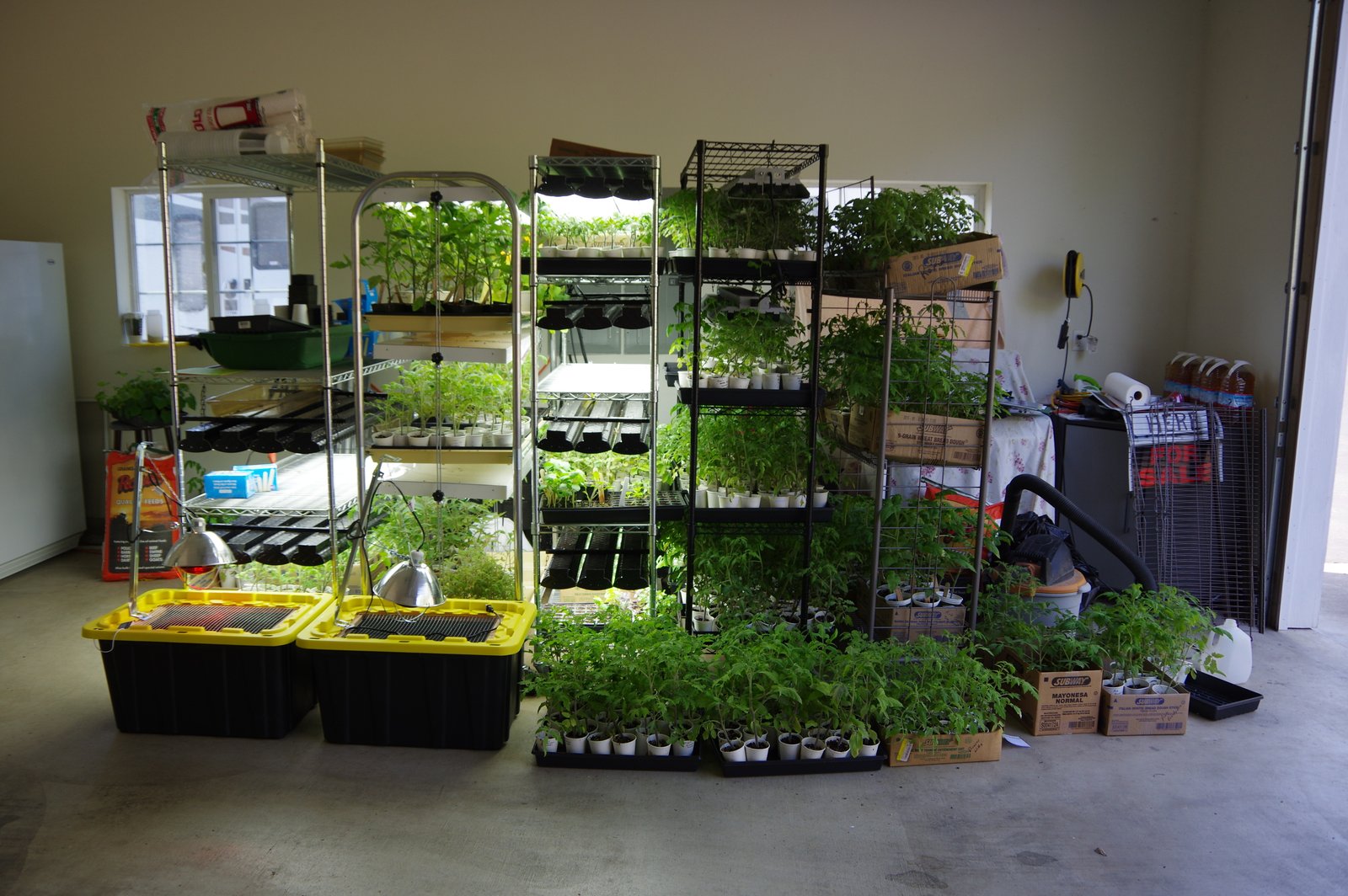
All told, I spent about $600 on lights and added three more shelving units to the garage, plus two additional units I left unlit. Once the weather warmed up later in the season, I could roll those unlit units right outside during the day and the plants did just fine without them.
Why the Wheels Mattered
The wheels turned out to be the best decision in the whole setup. On a normal day, the shelving would roll together into a tight, compact growing space that didn’t eat up the whole garage. When I was ready to sell, I’d roll everything straight out into the driveway, and it made a genuinely good display for customers to shop from.

Getting the Word Out
For selling, I started with a Craigslist ad and had a decent response, but the plants were growing faster than I was selling them. So I added a second ad in the garage sale section of Craigslist and put signs out on the road too.
Since I only raised heirloom varieties from organic seed in organic potting soil, I wasn’t really competing with what the retail stores were offering, which made the pitch easier.
Home Sales vs. the Farmers Market
I tried a farmers market for a few weeks alongside the driveway sales. I ended up making about the same amount of money selling from home as I did at the market, except at home I was still around to eat lunch and pot more plants while I waited on customers. Between the loading, the unloading, and the hours spent waiting, the farmers market wasn’t worth it for me. That might be different in a bigger town with more market traffic, or if you don’t have a driveway or street frontage that works for selling. For me, the driveway won every time.
If you want the full breakdown of what this operation actually made, the plant count and the profit, that’s covered in turning skills and excess into income. This post is really just the how: cheap cups, secondhand shelving, and a setup built to roll in and roll back out again.