Here’s an expensive lesson. For years I kept about seven varieties of garlic going, saving my own planting stock every year. Then last year, when I thought I was moving, I gave it all away. Every bit of it. If you grow garlic, you already know why that hurts. Garlic is one of those crops where you save some of what you harvest and plant it again in the fall, so once you have it, it keeps going year after year. Get rid of it, and you’re starting over and buying it all back.
So that’s what I did this fall. I started over, and this time I kept track of every number.
Where I Got It
I bought my garlic from Territorial Seed Company. I stopped in at their store in Cottage Grove and picked it up in person. (I wrote about why I’ve bought from them for so long in Where I Buy Seeds (And the One I Quit Buying From).) This year I’m planting four varieties: Silver Rose, Susanville, Chesnok Red and Music.
If you’re reading this and thinking you’ve missed garlic season, you may still have time. Territorial’s own guidance for northern areas is to plant by the end of October, or 6 to 8 weeks before the ground freezes. Here in western Oregon the ground doesn’t often freeze hard, and I got mine in during the middle of November. Just don’t wait too long. When I checked Territorial’s website a week later, some varieties were already sold out.
Two of those are softneck (Silver Rose and Susanville) and two are hardneck (Chesnok Red and Music). I plant a batch of one type and then a patch of the other, so if a label ever goes missing I can still tell which is which. I wrote more about that in Knowing What You Planted (Because You Can’t Buy a “Whatever”).
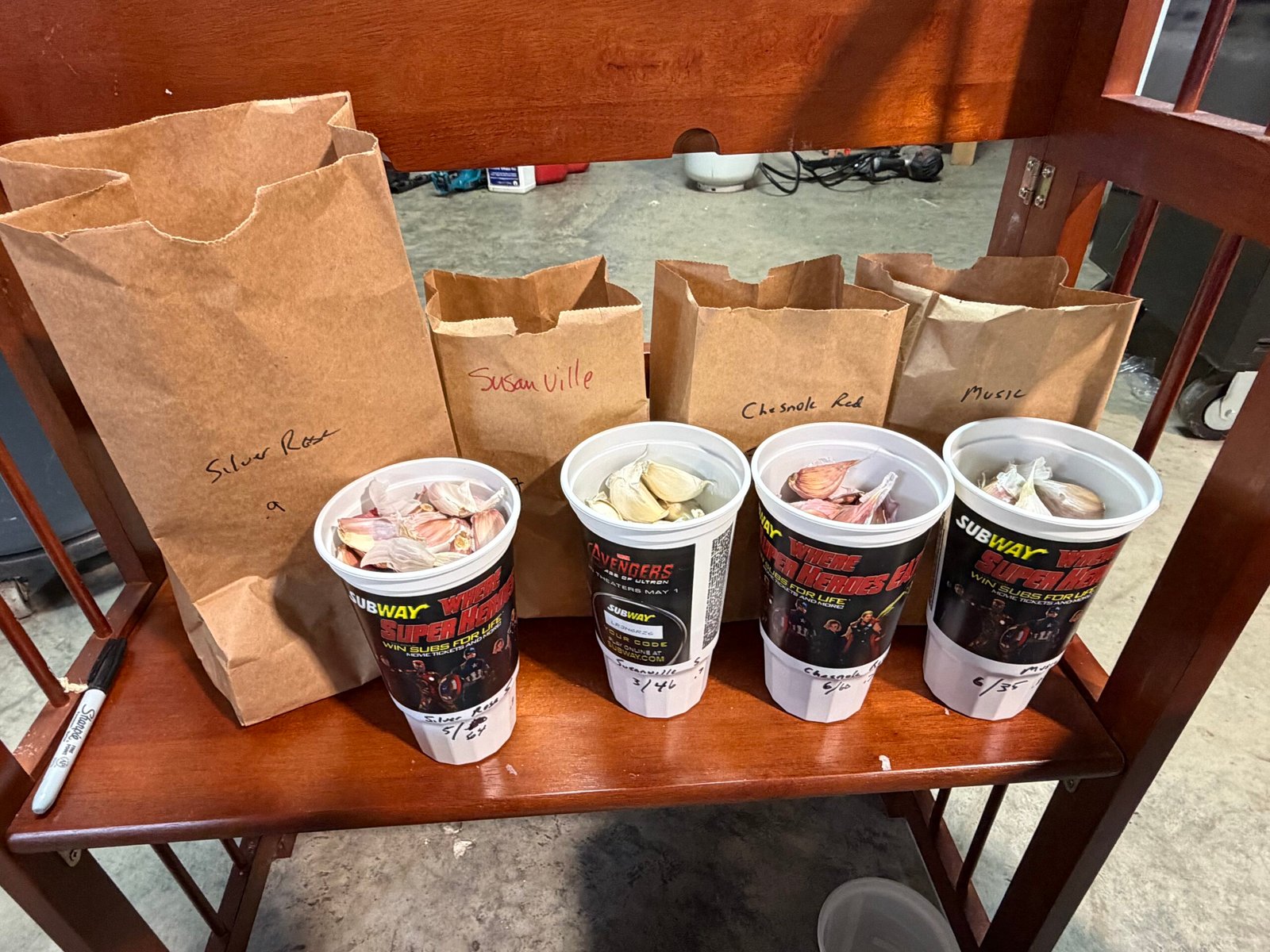
Break Up the Heads Before You Go Out
For over 20 years, I broke up the heads right there in the garden and planted the cloves as I went. It works, but you’re bent over or kneeling the whole time, and by the end you’re not really sure how many of what went where.
Over the years I learned a better way. Now I sit somewhere comfortable, break up the heads into cloves, and put each variety in its own cup. Then I mark the cup with:
- the variety
- the total weight
- the number of heads
- the number of cloves I got from those heads
I don’t plant the really tiny cloves, so the clove counts are what actually went in the ground. Here’s what this year’s cups (and my receipt) say:
| Variety | Type | Heads | Weight | Price per lb | Cost | Cloves planted |
|---|---|---|---|---|---|---|
| Silver Rose | Softneck | 5 | 0.9 lb | $39.95 | $35.96 | 64 |
| Susanville | Softneck | 3 | 0.7 lb | $31.95 | $22.37 | 46 |
| Chesnok Red | Hardneck | 6 | 0.7 lb | $31.95 | $22.37 | 60 |
| Music | Hardneck | 6 | 0.8 lb | $31.95 | $25.56 | 35 |
| Total | 20 | 3.1 lb | $106.26 | 205 |
(That’s before shipping and tax, and I didn’t pay shipping since I picked it up.)
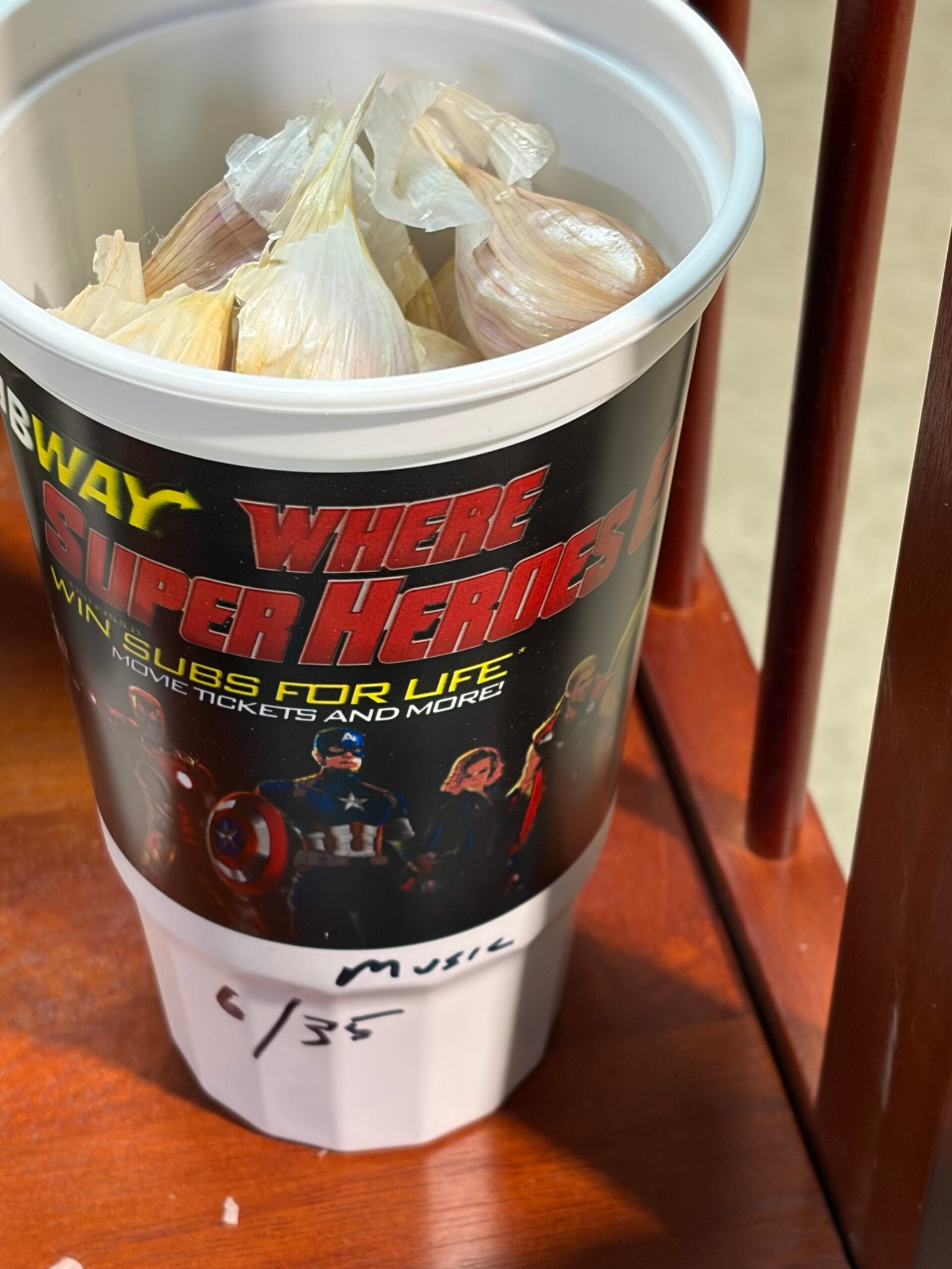
Notice how different those numbers are. Six heads of Music gave me 35 cloves, and three heads of Susanville gave me 46. Some varieties have a few big cloves and some have a lot of small ones. That changes what each clove really costs you:
- Chesnok Red: about 37 cents a clove
- Susanville: about 49 cents a clove
- Silver Rose: about 56 cents a clove
- Music: about 73 cents a clove
Music and Chesnok Red cost the same per pound, but Music costs almost twice as much per clove planted, because its cloves are so big. That’s exactly the kind of thing you’d never notice unless you wrote it down.
One more money tip if you’re buying. Territorial sells most of their garlic by the pound and by the half pound, and the half pound costs a lot more per pound. Their Messidor, for example, was $39.95 for a pound or $24.95 for 8 ounces, which works out to almost $50 a pound. If you have the room, a full pound gets you a lot more cloves for your money.
And planting goes much faster. You carry the cups out to the bed, and the only job left is putting cloves in the ground. When you’re done, you have a record of exactly what you planted.
Planting Day
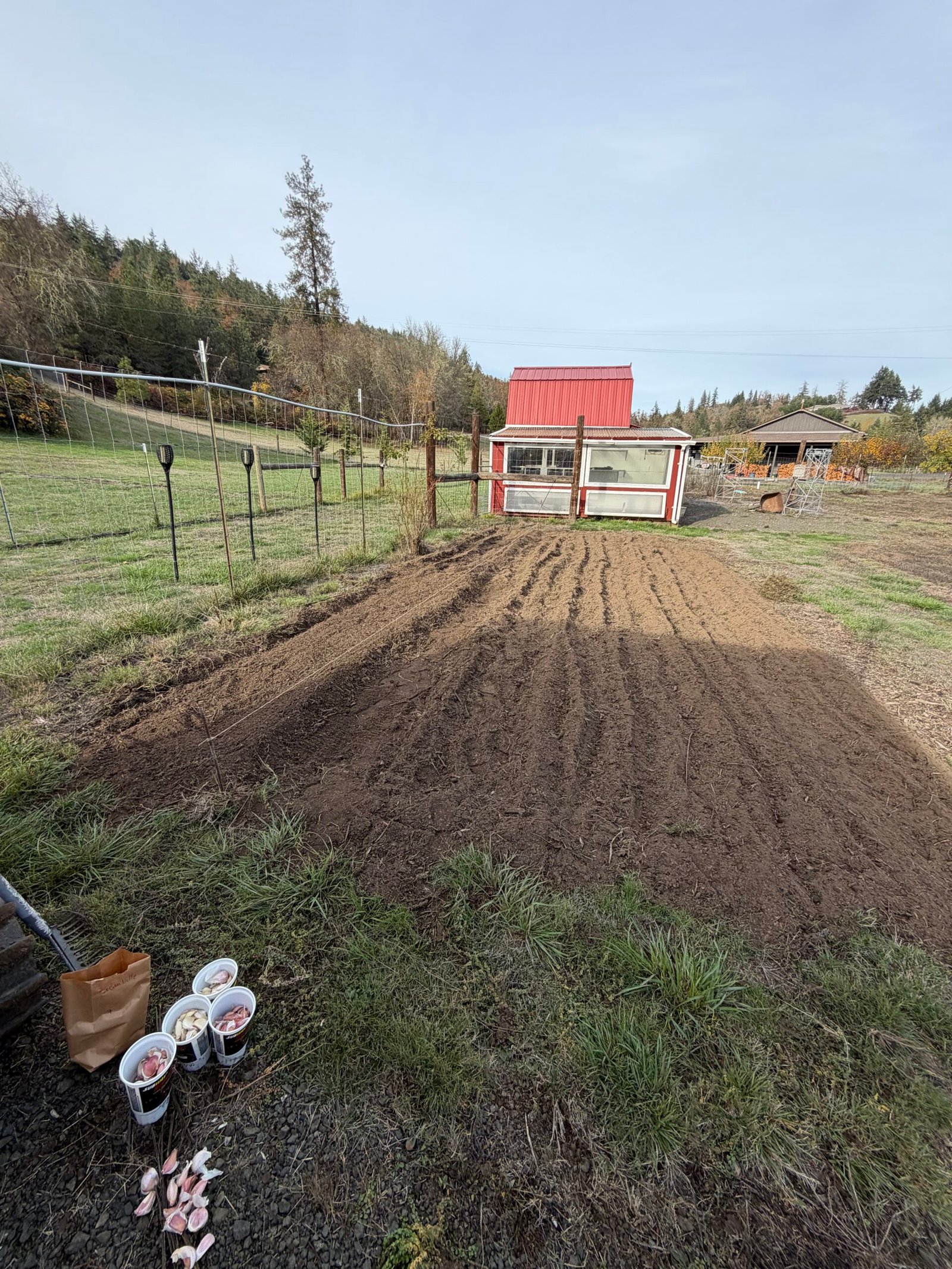
I was running late this year. I had some minor surgery on my right hand and arm, so planting got pushed back, and when a small break in the weather finally came, I had to get the garlic in as soon as I could. That’s one more reason the cups helped. With everything already broken up, counted and labeled, all that was left was getting it in the ground. (They helped my back, too.)
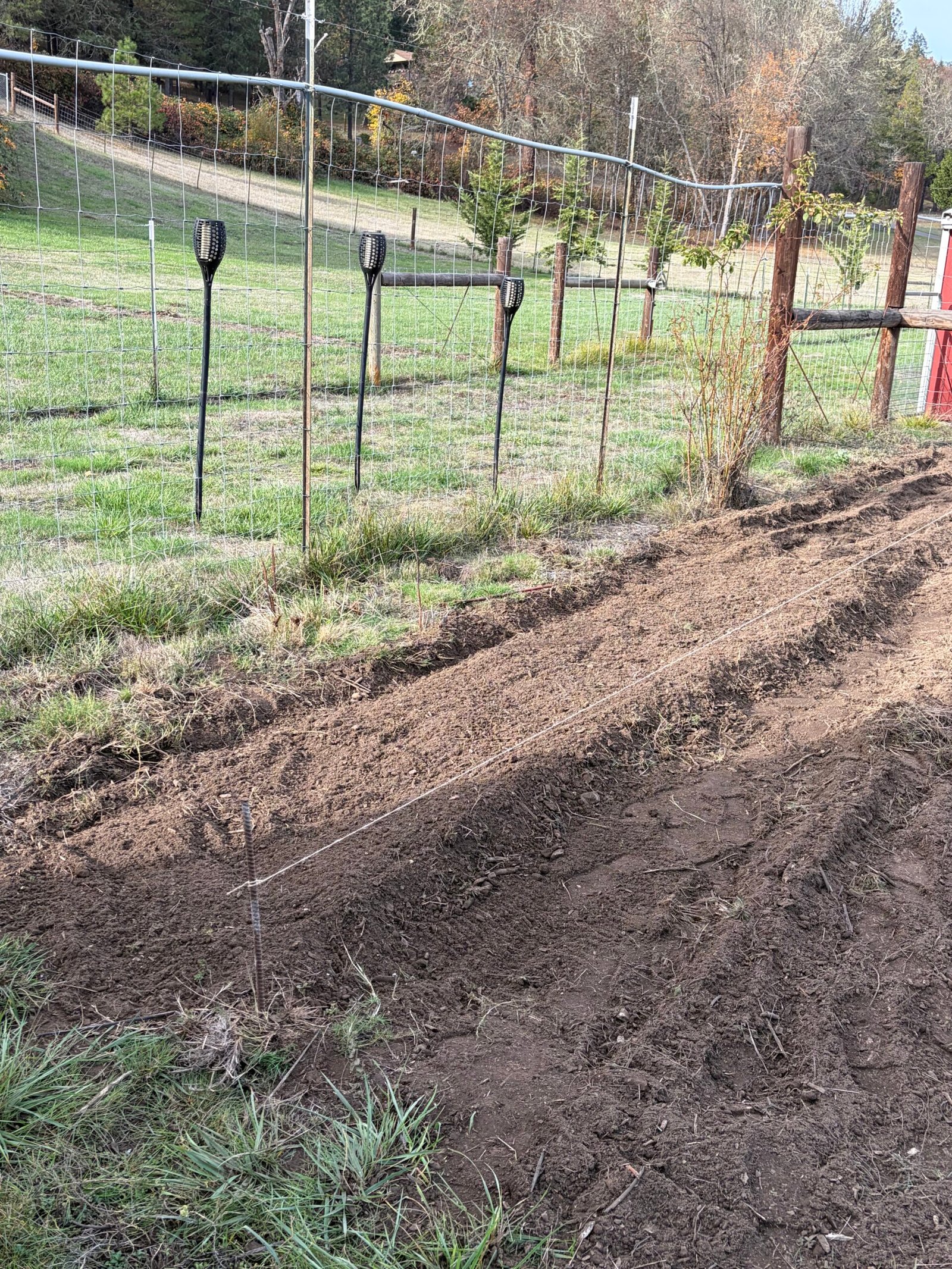
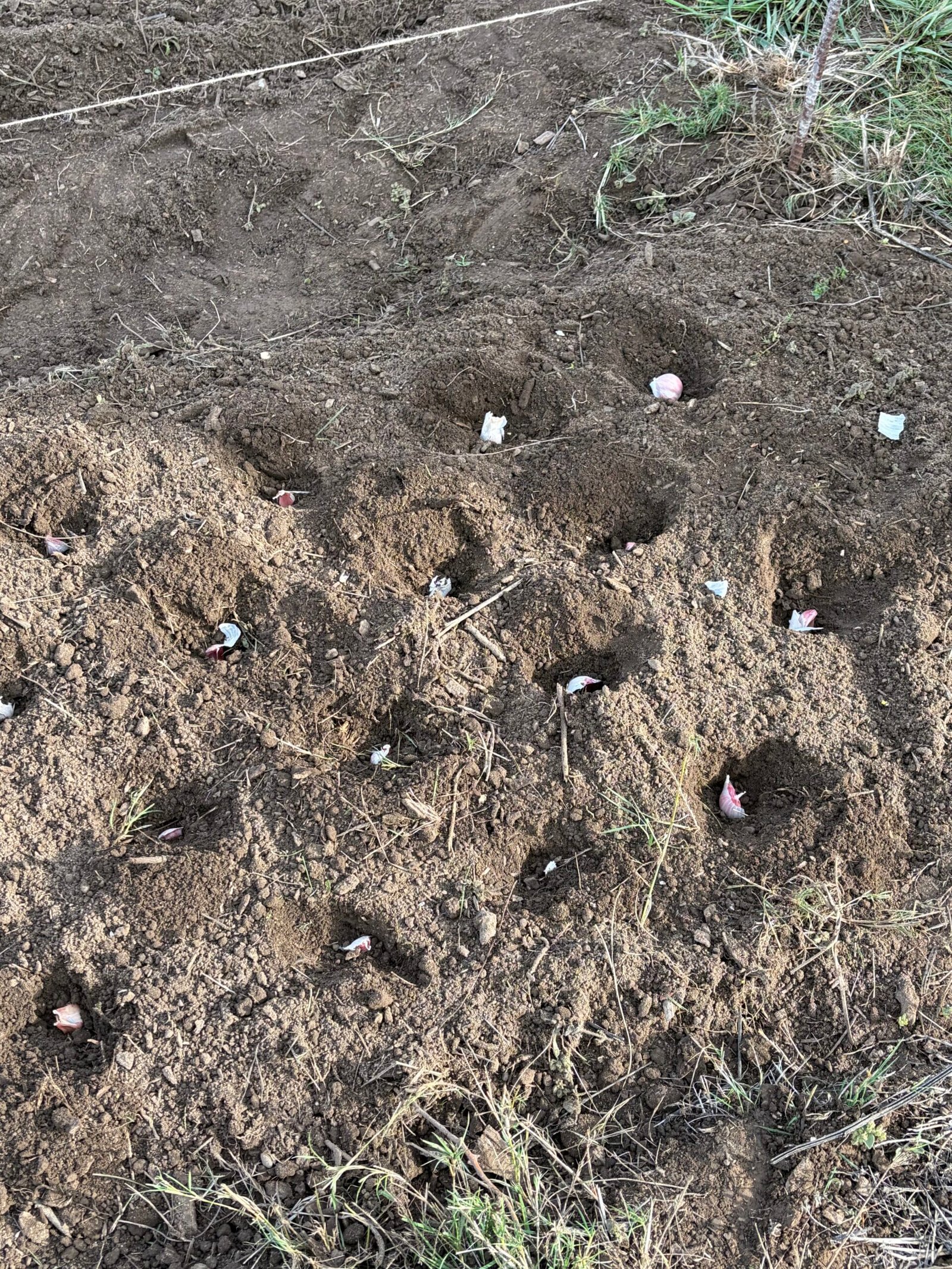
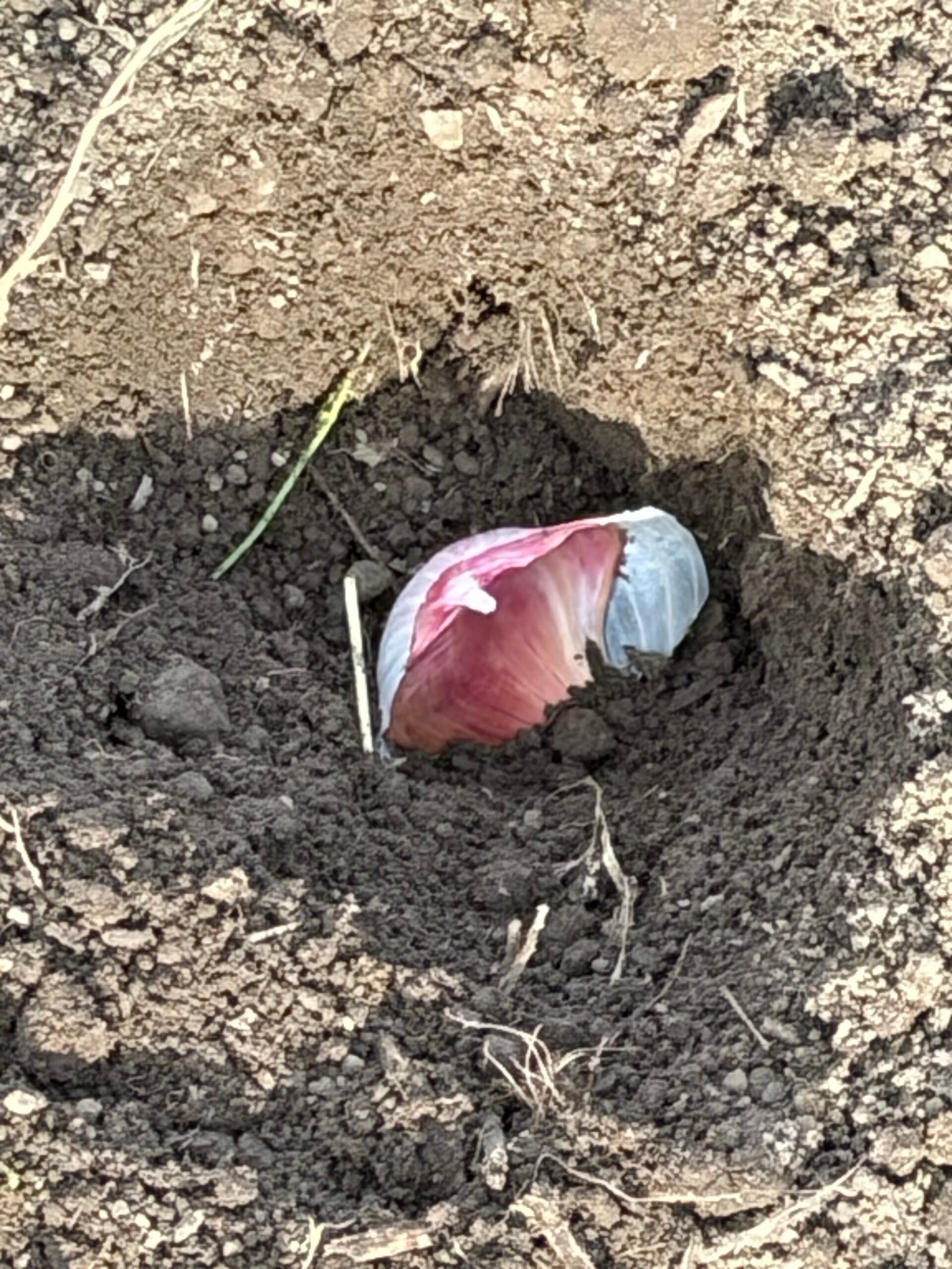
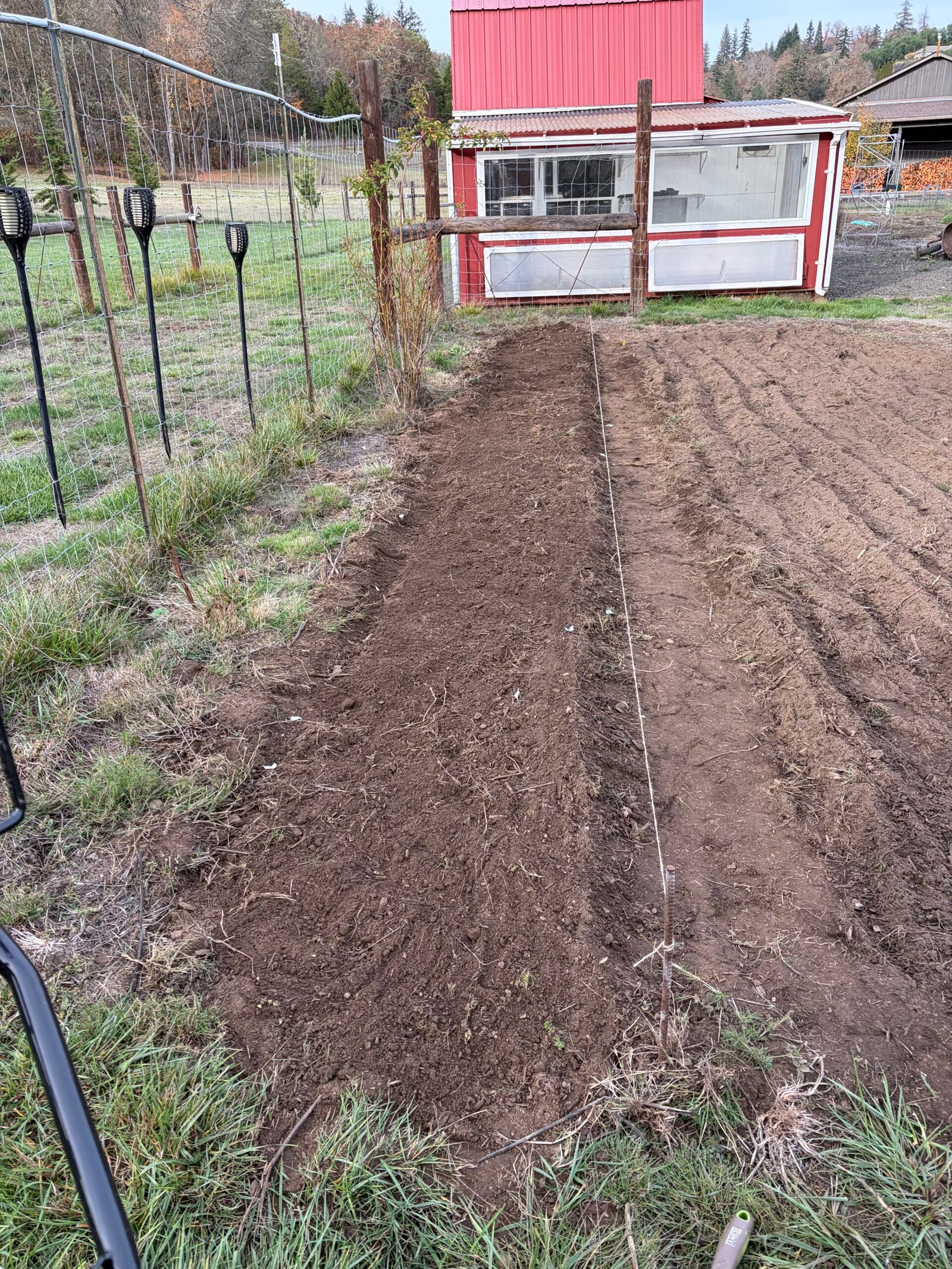
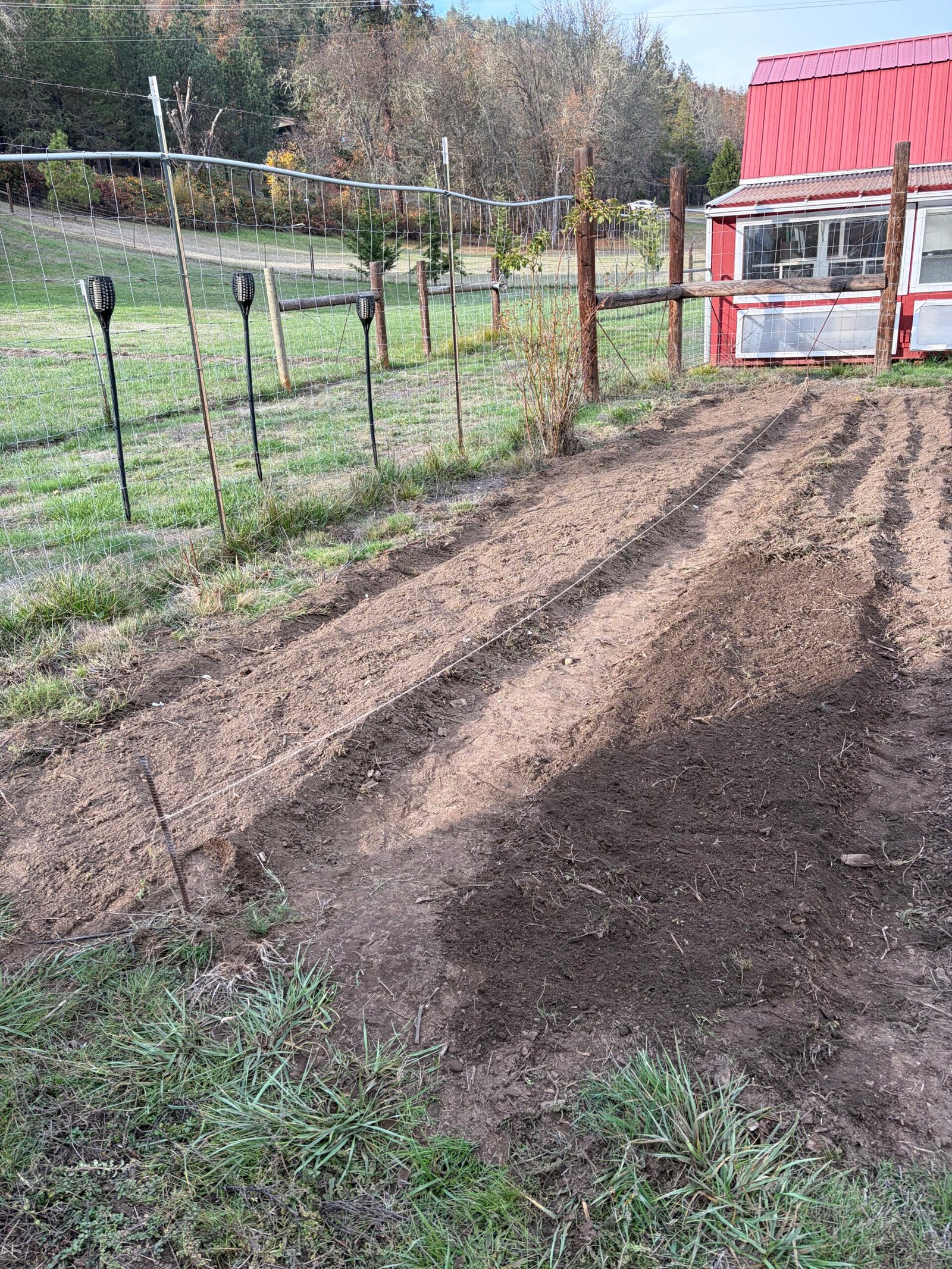
In years past, I double dug my garlic beds by hand. This year I prepped them with my new Toro rototiller, and that was it, just the rototiller. It’ll be interesting to see whether that makes a difference at harvest. My beds are 30 inches wide. I plant intensively, in a staggered triangle pattern, with the cloves about 8 to 10 inches apart. All four varieties took 43 feet of bed: 12 feet of Silver Rose, 10 feet of Susanville, 12 feet of Chesnok Red and 9 feet of Music. That’s about 107 square feet for 205 cloves, roughly half a square foot per clove. As for depth, I plant by instinct, but it averages about 2 inches, and a little deeper for the big cloves.
What Saving My Own Will Be Worth
Here’s where the numbers get interesting. If most of those cloves make a bulb next summer (say 90 percent), and each bulb splits into about the same number of cloves as what I bought, then I only need to set aside about 20 bulbs to plant the same 205 cloves again next fall. That works out to roughly 5 bulbs of Silver Rose, 3 of Susanville, 6 of Chesnok Red and 6 of Music.
Those 20 bulbs replace a $106 garlic bill, every year, for as long as I keep it going. Everything else I harvest is food. That’s the part I gave away last year, and that’s why it was such an expensive lesson.
Those are estimates, not a harvest yet. I’ll report back next summer with the real numbers: what came up, what the bulbs weighed, and how much I actually saved.
Don’t Make My Mistake
If you’re thinking about moving, or you’re just tired of the garden for a year, keep some of your garlic anyway. Plant a few cloves in a pot, a flower bed, or a friend’s garden. It doesn’t take much space to keep your varieties going, and it’s a lot cheaper than buying them all back.
And whatever you plant, write it down: the variety, the weight, the heads, the cloves and what you paid. Next summer, when you’re pulling garlic, you’ll know exactly which bed is which, and which variety you want to save for the next round. I made free garden bed planting sheets for exactly that, and you can grab them in Knowing What You Planted.